Friday, June 27, 2008

O Street Market Gets Its Dough

6 comments
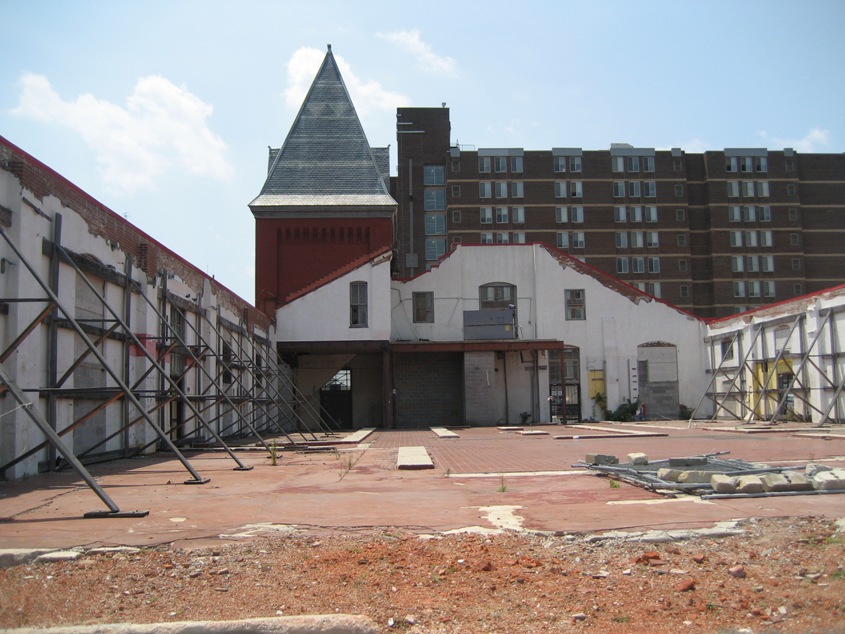
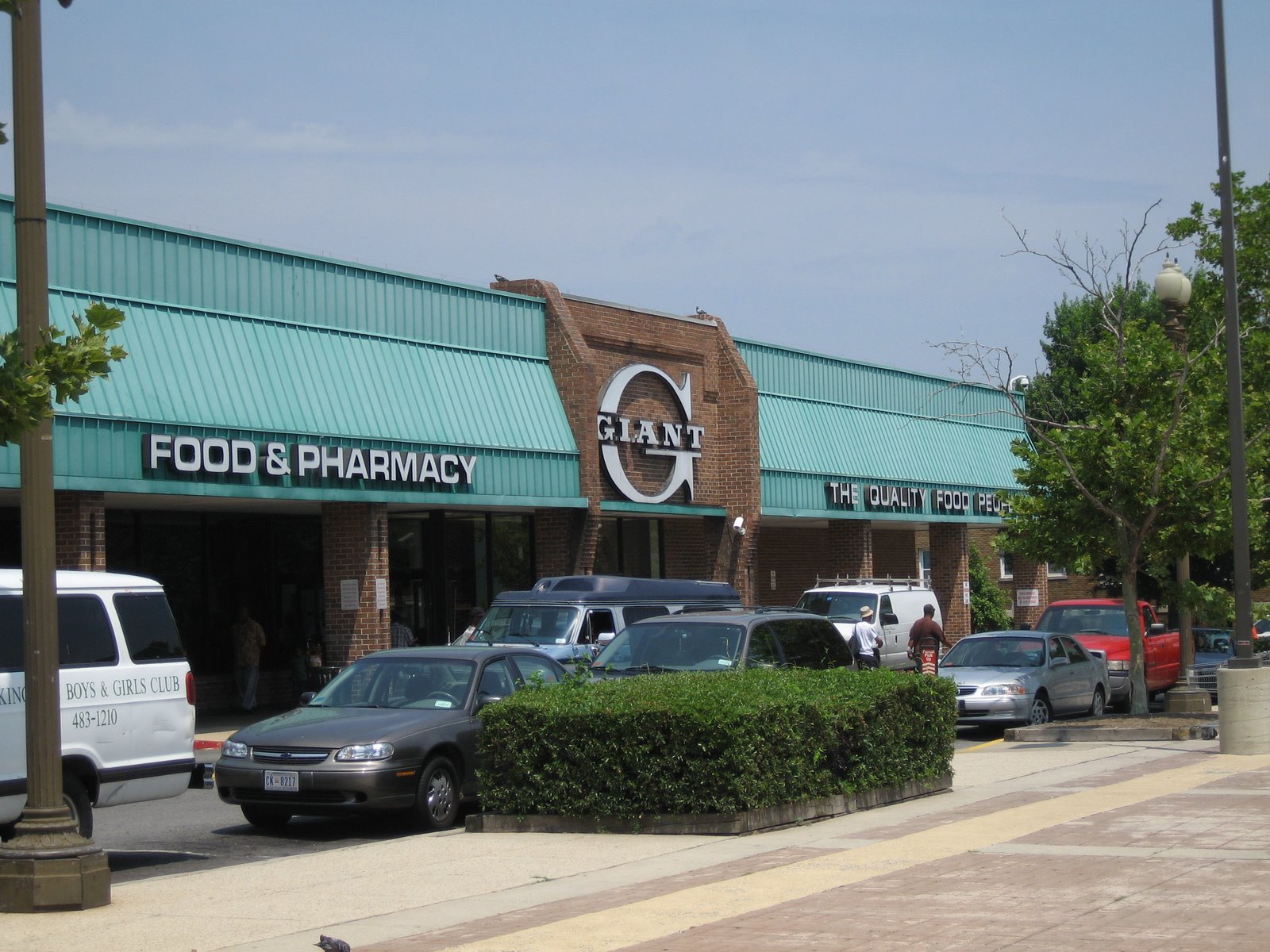
The District of Columbia announced today an agreement with Roadside Development to help finance the O Street Market, a mixed-use development that will likely be the showpiece for a revitalized Shaw. The deal will provide a $35 million tax increment financing (TIF) package to help developers bridge a financial gap and achieve the $260 million needed for the project. The current market, built in 1881 and now a crumbling memento of the neighborhood's failure to attract the investment, has sat vacant for years, but will now be transformed into a mixed-use anchor that will include 630 residential units, 80-100 of which will be affordable, senior housing units, a 200-room hotel, a 560-space parking garage and 87,000 s.f. of retail that maintains the historic facade. Giant will replace its 28-year-old Giant grocery store with CityMarket, a 71,000 s.f. store that will be the largest supermarket in DC and the largest Giant store in the chain.

Under the new financing agreement, the District's contribution will support bond issuance to cover a portion of initial construction costs and the developer will repay the bonds with part of the new tax revenue generated by the project. If the DC council passes the pending financing package at their July 15th meeting, construction will begin in a year. "This is what we need, it is what we deserve, it is long overdue, but now on its way," Mayor Adrian Fenty told a cheering crowd of Shaw residents at this afternoon's press conference.

"This is a big day for us, I would like to see the O Street Market get the same kind of attention and expediency that we saw at Eastern Market, so it's exciting. It is a project that has something for everyone, community benefits - affordable housing, senior housing, parking - it really has the support of the entire community. It was just frustrating to see it go through so many hurdles to get to where it is now," Cary Silverman, DC Council, Ward 2 Candidate told DCMud.

Roadside originally slated the market for renovations to accommodate new retail space, but heavy snow brought the roof down both on their plans and the building itself in February of 2003. Since then Roadside formulated a $250 million revised plan to not only bring the historic market back to its original splendor but to fill four acres of land between 9th, 7th, P and O Streets, NW with residential and commercial space.

In August 2007, the Historic Preservation Review Board approved revitalization of the site and the Mayor's agent for historic preservation ok'd partial demolition because of the development's special merit, leaving the Zoning Commission as the only entity standing between Shaw residents and their commerce. But a lack of agreement between Zoning and the developers led to three months of hearings; an October 15th meeting ended with Zoning's complaints about the 110-ft. building height and they sent the project back to the design phase again on November 19th. The Zoning Commission approved the project for "set down" at the December 10th meeting, and gave it final approval on May 12th.

Developers eliminated the residential space planned for the top two floors and deleted 100 parking spaces and 20 affordable units from the scheme to reduce construction costs and compensate for the loss of potential income.

In addition to a brand new grocery store, other project benefits include $255,000 worth of charitable contributions to Shaw organizations, a shuttle to operating Giant stores during construction, 400 construction jobs, 400 permanent jobs, and the reconnection of 8th street to increase pedestrian activity in the area.

Thursday, June 26, 2008

National Building Museum Features Butterfield House

0 comments

SPONSORED FEATURE

The National Building Museum will be sponsoring a tour of the Butterfield House, at 1020 Pennsylvania Avenue, SE, on Friday, June 27th. The organization, a Congressionally-chartered institute to enhance more thoughtful and architectural techniques, sponsors its monthly tour to "highlight special construction methods and innovative technologies used in the building process. Some tours have focused on green building strategies, while others have examined preservation projects of historic buildings."

SGA, a Bethesda-based firm performing both architecture and multi-family development, converted the site from an auto repair shop to a high-end condominium, completing the project earlier this year. The developer is now selling the remaining 8 units in the 28 unit building, and is celebrating what will be an iconic building due to its classic design and Pennsylvania Avenue address.

The new condo sits just two blocks from the Eastern Market Metro station and Barrack's Row, and advertises such features as cork sound remediation layering between the floor and subfloor, reclaimed wide-plank cherry floors, underground parking, and video entry systems. Condos start at $359,000 for one bedroom and at $575,000 for two bedrooms.

Monument v. Akridge - Everyone Wins

3 comments
In a Solomonic decision, the Washington Metro Area Transit Authority (WMATA) today agreed to sell the controversial Southeast Bus Garage properties at the ballpark - skirmished over by The John Akridge Development Company and Monument Realty, LLC - to both developers. WMATA's decision ends a legal fracas for control of the property WMATA bestowed upon Akridge, an award Monument claimed was improper. The site is located at the corner of Half and M Streets, just one block from the new Nationals ballpark and across the street from the Navy Yard Metro station, and includes a bus garage and employee parking lot. Akridge will pay over $46 million for the 69,607 s.f. bus garage while Monument will pay over $22 million for the 27,558 s.f. parking lot.

Today's sale is the culmination of an ongoing saga spurred by Monument's lawsuit against WMATA's sale of the properties to Akridge last fall. Monument, which already controls the other side of Half Street, contested the sale and in February won an injunction prohibiting sale of the garage, pending further consideration by the judge. Monument Realty had originally planned 100,000 s.f. of retail for the site on the western side of Half Street, the main strip leading to the ballpark, which would have added to their 275,000 s.f. of office space, 50,000 s.f. of retail and 320-unit residential project already underway on the eastern side of Half Street.

He's out; no he's safe...

The suicide squeeze began when both Monument and Akridge responded to WMATA's solicitation for the garage. Because Monument’s proposal contained an escalation clause that Metro’s offering specifically forbade (oops), WMATA disregarded the escalation and judged Akridge's bid higher, awarding the site to Akridge for $69 million.

But Monument asked for the instant replay, pointing back to December 2005 when the Anacostia Waterfront Corporation (AWC) pronounced that Monument Realty was the Master Developer for the Half Street Area. Under this declaration, the master of the street had the right to develop all District-owned properties along Half Street. As Monument's holdings increased to include the eastern side of the street including the Navy Yard Metro, AWC tried to negotiate the acquisition of the bus garage to complete the package.

Here's the Pitch...Strike One

Monument, all the while still acquiring real estate in the area, made an unsolicited bid on the bus garage, working directly with WMATA, not AWC, which had just gained control of the area. Metro, deciding to make the call on its own, responded to Monument's offer with an Invitation for Bidders, hoping to get more out of a competitive process. But when the District asked that WMATA end the solicitation and coordinate with AWC, WMATA complied.

Strike Two

It was then that District stepped in and proclaimed it would purchase the site and negotiate directly with developers. WMATA withdrew its invitation and agreed to sell to the District.

Let me sleep on it....

WMATA says the District subsequently decided not to purchase the bus garage. WMATA, thinking itself free of its first-right obligation, issued a second Invitation for Bidders. This time, ten companies bid – a process that ended last September and resulted in Monument’s bid being disqualified and Akridge being awarded the site.

But in drama worthy of a Meatloaf baseball metaphor, Monument sought a Temporary Restraining Order against WMATA on October 26th to enforce the District's right of first refusal as an intended third party beneficiary, claiming breach of contract, fraud, and breach of fiduciary duty.

The District Court threw out the tort claims because of WMATA's sovereign immunity, but did not throw out the remainder. Monument re-filed on January 2 of this year, with a revised motion for a preliminary injunction against the sale, which the judge granted at the end of February.

At that time, Co-founder and principal of Monument (and former Akridge exec), Jeffery Neal, said,"The Court recognizes the merits of this case by taking the serious step of ordering injunctive relief. We are committed of the Capitol Riverfront neighborhood as evidenced by our investment of tens of millions of dollars in this project over the past several years. We've always had a grand vision for Half Street and realize the importance of the project as it is the gateway to Nationals Park. It is great to know that we still have the opportunity to make the city's goal of having a coordinated development plan. A successful project for us also equals success for the city and for The Nationals."

In February’s injunction, the District Court found that WMATA was obligated, based on its own Policies and Procedures, to offer the host government (here, the District) the first right of refusal on any property it sells, priced at fair market value. The decision stopped transfer of the land until the court could review the merits of the case, and left the highly valued property in legal limbo, just as the stadium was getting ready for opening, and set the stage for today's resolution.

It never felt so good, it never felt so right

The compromise announced today will grant Monument a smaller parcel than Akridge, while WMATA happily walks away having closed a deal for about the same as Akridge's $69 million bid. And it will avoid alot of icy stares across high-priced skyboxes.

WMATA: Florida Avenue Developer Selected

2 comments
After announcing yesterday that a decision on the year-old Florida Avenue RFP would not be forthcoming, WMATA's Board of Directors met today in a closed-door session and selected a development team. The decision regarding three lots adjacent to the Shaw-Howard Metro had been held off since May of last year, when bids were submitted, and WMATA Media Contact Angela Gates had prognosticated that a decision would not be made "for another six months." In a surprise decision, WMATA officials today gave its staff permission to negotiate a Development Agreement with Banneker Ventures LLC, Metropolis Development Company, LLC, and District Development Group, LLC. The transit authority did not formalize terms of an agreement, so today's announcement opens negotiations between the winning bidders and WMATA to come to agreement on development of the site, but no final plan is certain.

The contest for the site had been between nine submissions in response to last year's RFP, and had been winnowed down to three as of yesterday. WMATA's press release stated exuberantly that "the team has the experience to complete the project," though cited only Metropolis Development's experience, pointing to its completion of Langston Lofts, one of the DC developers earliest projects. The 80-unit condominium was built by MDC above a Metro line, requiring coordination with WMATA to produce caissons to straddle the existing tunnel.

According to WMATA's Board Action/Information Summary, "The developer provided a better financial offer than its closest competitor and the same type of development - four to five stories of residential units over a ground floor devoted to retail and arts uses...The third competitor did not meet appraisal benchmarks."

Despite the surprise timing of the decision, Merrick Malone, principal and Executive Vice President of Metropolis was upbeat about the project: "Metropolis has proven demonstration to build on top of the Metro tunnel, we know how to go through this process."

WMATA's Florida Avenue Project: And Then There Were None?

7 comments
WMATA, which holds title to three key parcels of land on Florida Avenue in Shaw, wants someone to develop its vacant land. But not that badly. WMATA issued an RFP for the properties in April of last year, and nine developers got in line quickly to explain why they should be chosen, but Metro apparently wasn't in a rush to chose a suitor.

According to Angela Gates, Media Relations person for WMATA, board officials will meet today in a closed session to continue the selection process. "There won't be a public announcement for another six months," Gates said.

The process began in April of 2007, when WMATA announced it had received an uninvited offer for the three parcels, located between 7th and 9th Streets on the south side of Florida Avenue. Because WMATA's rules require that it consider competing bids, the Metro authority issued an RFP the same month and required responses by May 30, 2007.

Proposals were due in May of last year at which time nine developers submitted plans, so why, a year later are applicants and neighbors still without an idea of what kind of development WMATA seeks for the land?

Gates said Metro delayed the decision to find a developer for the joint development project because the "Board of Directors wanted further information" on the selection process. WMATA said their questions about the method of selection are confidential, but that the process included, "review of the quality and value of the proposals, the qualifications and experience of the proposers, the ability to implement the project as proposed and the consistency of the proposals with WMATA's needs as well as local development policies and needs." Sounds pretty straightforward.

Gates said there were two stages of the review process and that all applicants still in the running are local development firms, but could not release the names of any companies. In the first round, nine developers expressed interest, this pool was then narrowed down to six, who were invited to submit further proposals. In the second round, four bidders returned, two of which have since merged.

The parcels up for grabs, now an active flea market, is just one block from Howard University Hospital and the Washington Convention Center. Parcel one is 3,800 s.f. with frontage on 9th Street and Florida Avenue. Parcel two, a mere public alley away contains 8,600 s.f. and fronts 8th Street and Florida Avenue, and parcel three, on the other side of 8th street is the largest space at 16,472 s.f. that front Florida Avenue and 8th Street. The parcels are zoned a medium density community center zone that allows a maximum height of 65 feet, with up to 80 percent residential occupancy. The lots do, however, pose a challenge for potential developers. Each lot is encumbered by the Metro tunnel that passes below, limiting excavation to nineteen feet - so much for below-grade parking. According to the RFP, there will be incentives for below-market rate housing, arts, and other such community-serving features. The initial announcement says WMATA is open to both lease and purchase agreements, but prefers the former for obvious reasons.

While there seems to be no rush in achieving this, WMATA said, "The primary consideration in this case is remaining consistent with the local development plan, which supports transit-oriented development and promotes a mixed use of residential, office and retail space. Metro hopes that development around the Shaw-Howard U Metrorail station will help revitalize the area, promote transit-oriented development, increase activity and liveliness, continue U Street's rebirth and promote center city living."

Monument - Arlington Land Swap Approved

0 comments
A real estate swap between Monument Realty and Arlington County, approved last night by the Arlington County Board, will allow the developer's Monument View project and the County's recreational "Long Bridge Park" development to move forward.

As DCMud reported last year, "Long Bridge Park," formerly known as "North Tract," will be a twenty-eight-acre "state of the art aquatics, health and fitness facility and park" running along the Potomac. Bounded by Shirley Highway Interstate 395, The George Washington Memorial Parkway, and 10th Street, the swap gives the county the last seven of the twenty-eight acres needed to complete the park.

Arlington Board Chairman J. Walter Tejada said the decision was a step in the right direction for the new Potomac facility. "The Board's action today brings us an important step closer to developing a much-needed and long anticipated sports and aquatics facility on this key site. The County will now complete the land swap and move forward," Tejada said.

Monument's portion, located on a 4.7-acre site at 333 and 335 Old Jefferson Davis Highway, just north of Crystal City, will include an eight-story office and retail building with 323,229 s.f. of office space and 3,512 s.f. of ground floor convenience retail. Unlike its Vornadoville neighbors to the south, the 352-unit residential building will rise only four to seven stories, probably necessary due to its proximity to and location directly under the flight path to Reagan National Airport.

Bounded by S. 6th, Ball, and Clark Streets, the residential project will "create a gateway to Long Bridge Park" on its southern edge. And since there is no such thing as an even trade with the government, as part of the plan, the developer will make a $2.5 million contribution to affordable housing as well as a $376,761 contribution to Long Bridge Park improvements.

Wednesday, June 25, 2008

Arlington Safeway Site Receives Approval

1 comments
The Arlington County Board approved plans today to renovate and expand the now-5,000 s.f. Arlington Mill Community Center into a mixed-use development. The project, designed by McLean-based Davis Carter Scott Design, and developed by Bethesda-based Public Private Alliances, LLC, a subsidiary of Clark Construction Group/Clark Ventures, will include brand new retail, residential, and parking space in addition to the new community center.

The first of the project's two buildings - the residential portion - will stand five five stories tall. It will house 159 units including studio, one, two, and three bedroom units, sixty-one of them affordable. The second, six-story, LEED-certified civic building will include 33 residential units, 3,000 s.f. ground floor retail, and the 40,000 s.f. community center; Arlingtonians can get excited about a new high school-size gym, two flexible classrooms, and a fitness center.

These rental apartments will include ten units for the Department of Human Services for its Supportive Housing Program and 40 two- and three-bedroom units with rent ranging from $993 to $1475.

Columbia Pike Initiative Coordinator, Jennifer Smith said the project is consistent with the County's vision of revitalization along the Pike. "It will add additional new residential units and me our the long-standing commitment by the county to have an upgraded community center for area residents. A place where they can come together to meet, and greet and have their activities," she said.

The developer will not be alone in footing the bill for the development. The project's public areas will be financed by $26 million in general obligation bonds authorized by voters in November 2006. The developer will also receive $11 million from the Federal Low-Income Housing Tax Credits program through the Virginia Housing Development Authority, and $3 million for using the value of the land lease payment to support the creation of the affordable housing units.

The 1.9-acre former Safeway site, located at the intersection of Columbia Pike and Dinwiddie Street, will also offer its residents and neighbors three levels of underground parking and a new public plaza along Columbia Pike. Construction is tentatively scheduled for late November.

Monday, June 23, 2008

Razing the Stakes on Capitol Hill

5 comments

The Louis Dreyfus Property Group has received final PUD approval for the razing of approximately fifteen adjacent historic townhouses on Capitol Hill to make way for Capitol Place, a 380,000-s.f. mixed use development with 302 condominiums and 20,000 s.f. of retail, designed by New York-based Cook + Fox Architects. The townhouses, dating from as far back as the mid 19th Century, will be sacrificed as part of a deal that will allow development of the site, but may also enhance protection of historic buildings on the rest of Capitol Hill.

The buildings, located at G and Second Streets, NE, are currently being leased to area businesses, and may be demolished as early as this fall. The trade will include an $83,500 payment from the developer to the Capitol Hill Restoration Society, enough to pay for a professional survey of the area to delineate the merit of an expanded historic zone. The survey is the first step toward an extended Capitol Hill Historic District which, according to the PUD, would include properties located "within the twenty-six blocks comprised of 2nd to 15th Streets, N.E., and F to H Streets, N.E., not including the Site or properties within the H Street Overlay."

The block misses the Capitol Hill Historic District - a legislatively demarcated zone which ends at F Street, NE - by one block, and therefore does not go before the Historic Preservation Review Board (HPRB). As with all raze permits, the application went through the Historic Preservation Office (HPO), part of the Office of Planning, but was not held for the customary thirty day discussion and review period because it was part of an existing PUD. Ultimately, all razes are signed by David Maloney, DC's State Historic Preservation Officer, whether historic or not. Non-historic razes end at the HPO after they double check that the structure and site are not historic; applications for historic sites go on to the HPRB. With Maloney's signature, the fate of this block was sealed.

In this case, even though the buildings are not in the historic district, Brendan Meyer, Preservation Specialist with the HPO, said the request was an unusual one to come through the office. “Typically we get 1950-1960 ranches out on the city fringes that are razed and subdivided, but something closer to the historic area would give us more pause. We would evaluate it and ask, ‘is it significant enough to do outreach to prevent the raze, or do we just say that it’s outside the historic district and let it go?’" Sean Cahill, Vice President of Development for Dreyfus agreed, “This is not your typical application,” he said.

According to Meyer, the Capitol Hill Historic District is listed as historic for its architectural history and marked with a longer period of significance (1791-1945) than other areas like Mount Pleasant (1870-1949). Meyer said that in the case of the Capitol Hill Historic District “It’s not one person or event, but a collection of architecture that represents a broad and rich timeline of DC’s urban development. It helps us understand how DC grew and how it became a city.”

That being said, he added that not every town house can be preserved. "They are perfectly nice and charming, but we have 8,000 others already established and we are protecting them. These townhouses are outside the district and there is nothing about them that makes them particularly special," Meyer said.

According to Cahill, the neighborhood ANC is on board, as is Gary Peterson of the Capitol Hill Restoration Society (CHRS). “We went through a mediation process with the neighbors on Square 752 as well as the ANC and the adjoining ANC, so it was a very long process,” Cahill added.

"I think most people are reasonably satisfied with where we ended up. I am a pretty ardent preservationist, so I hate to see old buildings taken down, but i think that the development will be a benefit to the city and we worked hard to design a project with the least negative impact for the remaining residents on the square," said Drury Tallant, Co-Chair of the Stanton Park Neighborhood Association Land Use Committee and square resident.

"If it were in the historic district, the buildings that are being taken down would be contributing structures and they would not be allowed to demolish them. One of the things Dreyfus offered to the community was money to pay for historic structural survey that would potentially lead to the expansion of the Capitol Hill Historic District to cover from this square to 16th Street... In essence, it was a bargain the community made in order to pay for the survey that is a prerequisite for expanding the district. These buildings were sacrificed to get the funds," Tallant said.

HPO's approval allows for demolition this fall; construction is anticipated within the following year-and-a-half, and delivery expected thirty-two months later.

Located adjacent to the H Street Overpass, Capitol Place will be the closest residential and mixed-use site on H Street to the Union Station Metro. Though it will share a block with the historic two and three story row houses, it will also sit across from the 10-story Senate Square, as well as a new 11-story office building still under construction. Reduced 43,000 s.f. from its original size, the 10-12 story building has been in the PUD process for the last three years as the developer worked with architects, the Zoning Commission, and the neighborhood to come up with an appropriate, neighborhood-serving design.

Other goodies for the neighbors include two micro-grant programs, the first of which will be $150,000 for which property owners of adjacent lots can apply to make repairs and improvements to the parts of their homes that are either within public space or viewed from public space. The second program will allow $80,000 for which property owners living on the construction square (752) can apply to make upgrades to their homes as approved by the CHRS. Finally, the developer will pay $20,000 to CHRS for administering the two grant programs. In addition to the grants, Dreyfus will also give $150,000 to H Street Main Street for the Clean and Safe Program.

The developer, which mainly works on “high quality, central business district and suburban office buildings” has properties in DC, suburban New York, and Paris.

Thursday, June 19, 2008

Industry Insight: Neil Albert on DC Development

8 comments
He may not get microphone time at every press conference or a pair of scissors at every ribbon cutting, but Neil Albert, Washington DC's Deputy Mayor for Planning and Economic Development, keeps busy as the man behind the curtain for development in DC. Despite a schedule kept full by the 10,000 new affordable housing units he has been charged with creating in his first four years, Albert made time to sit with DCMud to discuss the latest RFPs, affordable housing, and why he thinks DC can shed its monumental, federal skin and become an full-fledged international city.

You went from working with the previous Mayor as Deputy Mayor for Children and Families to the Deputy Mayor for Planning and Economic Development. How did you get into development?


Albert: I started in finance and headed a nonprofit in New York. I was interested in parlaying that expertise into development on a small scale. I had the opportunity to really get into development when I was Parks director; a large part of what I did was real estate development. We built a number of recreational facilities in the city, including the first LEED-certified facility in DC. I then became Deputy Mayor of Children Youth and Families because that portfolio was one of the ones that needed a little shaking up and focus and energy. The former mayor asked me to do it and I did it for a year. Then I went into the private sector and started a nonprofit working with DC schools in professional development and bricks and mortar actually building new schools. I’ve always had a real estate finance focus throughout my career.

When the mayor-elect asked me to join his administration in this role, I thought it was a great opportunity to put what I’ve been doing together. What I do is not just about financial real estate development, but there is a human component to what we do. A major part is the New Communities portfolio, the human capital – HOPE VI-type developments. We’ll be removing a lot of traditional government subsidized housing to create more mixed income housing. Part of that is changing psyche, the mindsets; preparing them to be able to write a red check, go to work every day like everybody else.

Speaking of subsidized housing, the bar for the amount of subsidized housing private developers must provide is being raised from 20-30 percent. On what basis was that decision made?

Albert: That decision was made before us. When the Anacostia Waterfront Corporation was dissolved, the Council adopted legislation that required the affordable housing component - that’s the majority of what my office works on. By default, it has become standard here.

How does that play into some of the other new developments the city has issued RFPs for - in which the city asked for 30 percent but is not doing the workforce housing? It’s like the city is focusing on lower income development.

Albert: The mayor made a real commitment to affordable housing when he was elected and we are committed to building over 10,000 units in the first four years at different AMI levels, so all RFPs have the 30 percent requirement and our language is pretty general because we want to make sure that we achieve affordable housing levels without paying unnecessarily for it. And so what drives affordable housing in mixed-income developments is having market-rate housing that can actually subsidize lower income housing without having to come to the District government for subsidies.

We want true diversity in housing. Whether it’s Hill East, Poplar Point, 5th and I, including the affordable component is necessary to have the correct mix.

These are perhaps not the best times for condo builders. How does that play into the marketability of a project during difficult times?

Albert: I don’t know if it makes it more difficult. From our experience, in the last few years, the development community has embraced not necessarily the 30-30-30 mix, but at least the 30 percent affordable component. City Vista is an example, and I think that’s kind of what’s driving that project being sold. It came on line at a time when the condo markets were going in the wrong direction, so having twenty percent of the units as affordable provided some stability. The market on the affordable level was much greater than the market than on market-rate level. The results and feedback from the development community have been positive. Yes, people like to make as much profit as possible, but we have to balance their need for the highest return with the broader city policy and goals for providing affordable housing.

You referenced City Vista and other projects that have an affordable housing element. Some developers have told us that they are having some difficulty finding qualified people and actually bringing them to the table, that this makes their job more difficult. Have you ever studied that?

Albert: I would say they need to try a little harder. We can do a better job as a government, having a central repository database, which we are working on. I know the city Council actually passed legislation that will require a sort of central registry for those interested in taking advantage of affordable housing projects. In some cases it’s about us doing a better job preparing applicants; it’s a huge education process that needs to go into preparing people for home ownership. You can’t just get up one day and decide to be a home owner. When you buy a condo, pay the fees, have to abide by the rules of the condo board or association - you have to have a down payment, some sort of reserve in case the AC breaks and it’s not the condo association’s responsibility - we can do a better job of preparing those in that income category to take advantage of these opportunities. In that case, yes, people have gone to the table and not closed.

Where did the 10,000 unit figure come from?

Albert: The 10,000 number came out of a housing task force in the Williams administration, and then-Councilmember Fenty introduced legislation that set up this Comprehensive Housing Strategy Task Force and they made a recommendation that the city needed to build 55,000 new units of housing over the next ten years to deal with the population increase, special needs housing, etc. And then they broke down some sub categories – 19,000 affordable, and for those affordable units, there were some smaller ranges that included special needs 2,500 units, etc.

We wanted to make sure that we could achieve that in a ten year period, so we set a goal of 10,000 in first four years, so with about 2,500 a year we are well on our way to at least funding those projects. We’re not only calling for them, we are providing funding for them through the housing production trust fund and some of the other housing sources available. I am confident that we’re going to make that.

In terms of your position, you have a huge hand in what happens in terms of development, and development seems very high on Fenty’s list given his appearances at development press conferences. How do you want DC to be perceived from a national standpoint, what are your development goals?

Albert: We want to truly make a diverse city here, but my opinion is that we have the great opportunity of positioning this city as a great international city on par with Paris and London and Amsterdam. People talk about great cities and I see DC as one of those. We are not on the cusp of that yet, we have a little ways to go, but I think we’ve got the major elements coming together. We have a vibrant downtown, people want to be here, and every vacant office building is being gobbled up by big lobbying firms or law firms or national organizations that need to be near the seat of power.

We’ve started to pay attention to our retail. We can now shop in DC, when I came here eight or nine years ago, you couldn’t do that. Now there are good restaurant choices, you have really great options springing up and also good entertainment options. The Washington Post did an article about how DC is no longer a daytime town, it’s becoming a nighttime destination, so you don’t just leave the office canyons and go home to the suburbs, you go to night clubs and restaurants in the central business district.

What I think will put us on par with some of the mature cities that make a statement both locally and internationally is having kind of the right balance between cultural amenities, which we have a lot of in our museums, but also local cultural amenities like the Spy Museum and Madam Tussaud’s; cultural amenities not just downtown, but also in other neighborhoods. We have lots of theaters and shopping destinations, so that when tourists come, they are not just sleeping in hotels and visiting the Mall, but also getting into the neighborhoods and discovering them. So what I would like us to be known for is raising the bar to be a city on par with a lot of the other international cities. And right now, we kind of lay in the shadow of great U.S. cities, but we are still holding our own.

How do you see your specific role and interaction with the private development community and with residents of the city - how do you mix the two?

Albert: I see myself as convener of private sector and the natural community residents who sometimes have needs that complement each other and sometimes oppose each other. In many cases, my role is just to be the arbitrator. Getting the services from the private sector that the residents need, whether it is incentives or bringing offices to neighborhoods so people don’t have to jump into a car to get to work, but can hop one metro stop to another. I really see my role as a convener or facilitator of those communities. I am really concerned about the amount of new jobs we create in the District, I’m happy to say that even while the rest of country is going through a downturn, we are still seeing job growth in DC.

Traditionally, you look at the government as the creator of jobs. In the District they still are, but the service industry is also creating new jobs in entertainment, restaurants, retail and the federal government is doing its role by positioning government agencies in the District – the DOT by the ballpark or the ATF building at New York Avenue. They put us in partnership with each other to keep the economy going.

Our job is bringing the balance between the haves and the have-nots in DC, so we have the big law and lobby firms and the non-profits and the associations who are squeezed by real estate taxes right now, but that add to the flavor of DC. Instead of them having to relocate to suburbia, we step in and try to provide incentives to keep them here. We are trying to keep a vibrant balance of community within the city.

The city has issued a number of development RFPs. When will we see some selections?

Albert: 5th and I will be announced soon, and Minnesota- Benning, we are so excited about that project, but we won’t make a selection until August. The developers up for that are City Interest who owns the East River Shopping Center and Parkside, Donatelli Development, and Marshall Heights Community Development Organization which is partnering with Rick Walker who did the Home Depot and Brentwood Shopping Center by the Rhode Island Avenue Metro station. They are all competing for the 600,000 s.f. of developable space.

And Tenleytown?

Albert: Tenley is still outstanding; we’ll hopefully have a decision soon.

Can we ask about MIZ (Mandatory Inclusionary Zoning, requiring most developers to build subsidized units)? Councilmember Graham has been vocal about moving it forward…

Albert: Yes, the mayor is committed to MIZ, but he wants to do it in a way that doesn’t slow or stop the development of mixed-income housing. My job is to do it right. We are getting comments from a wide cross section of the city including the private sector, affordable housing providers, and advocates.


We issued administrative regulations two months ago for comments. We are going to take those comments and reissue a draft of the regulations and put it out for final vetting and hopefully make a decision in the next sixty to ninety days. I also believe that the housing development community will embrace it because I think we’ll do it in a responsible way that’s non-punitive. Then, we’ve been looking across the country to see how this has worked. It’s a mixed bag but it’s going to happen.

Finally, developers have told us that they struggle with the amount of information that has to be provided with a PUD and with the amount of time it takes to get approval for projects in DC. What is your response to that?

Albert: I totally agree. We are working on it; the Office of Planning will be sending suggestions about how to streamline the process in the entire District. The PUD shouldn’t take 18 months anywhere in the world, not to mention the DC area.

Judiciary Square Apartments Rising

1 comments
One of Penn Quarter's last remaining vacant parcels will soon be occupied. Texas-based Hanover Company began construction in February on Ashton Judiciary Square, a 49-unit “luxury” apartment project at 750 3rd Street, NW. Designed by DC-based WDG Architecture and constructed by the developer, the new project is located next to the Mass Court Apartments, on the west side of I-395, three blocks north of the Judiciary Square Metro.

Back in 2007, Abdo Development demolished the Best Western hotel on the site to build Penn Tower, a 90-unit condo project, but later abandoned the plans and sold the site to the current developer. The Hanover Company's $45 million project is slated for delivery in spring 2009. The Downtown BID cites this space as the last remaining parcel of developable space - other than the already-spoken for Convention Center.

Why the downsize from 90 units to 49? The developer says it specializes in “premium multi-family units,” not condos. While pricing and exact square footage is not yet available, Stuart Rosenberg, a member of the developer's marketing team, told DCMud that “apartment footprints do tend to be spacious.” Minimum unit square footage in other projects hovers around 1,000 s.f.

The project's below-grade parking garage will offer the Downtown BID approximately 40 spaces upon completion. The developer is currently working on projects across the country in Boston, Philadelphia, Los Angeles, and Denver as well as the closer Crescent Falls Church in Virginia and Domain Brewer's Hill in Baltimore.

Seniors, Row Houses for Benning Neighborhood

4 comments
You would think that Benning Road had enough developments planned or in the works, with the Anacostia Waterfront Initiative, the outstanding Benning Road-Minnesota Avenue RFP, and the 150-unit development adjacent to the Benning Road Metro Station by the DC Housing Authority and Abe Pollin, but developers in the area can't seem to get enough, so in addition to its already approved massive mixed-use and mixed-income phase one development adjacent to the Cesar Chavez Public Charter School, Parkside Residential LLC is now seeking approval for a second phase of development. Phase one's progress is limited to approval - the site stands vacant.

The developer, a partnership between Bank of America Community Development Corporation, Lano International, City Interest, and Marshall Heights Community Development Organization, is planning phase two on 165,000 s.f. of land in the western end of the overall PUD site. The second phase of the project will front Anacostia Avenue, Foote Street, Barnes Street, and Franklin D. Roosevelt Place, NE and will include a 98-unit, four-story senior living facility and 112 market-rate and workforce-rate row houses at its completion.

The developer will build a 137,400 s.f. senior living facility on "Block A" complete with ground floor common areas that will include a fitness room, a salon, and a coffee bar, keeping its elderly residents fit, social, and caffeinated. The site will also include 18 parking spaces and an outdoor terrace. "Block B" and "Block C" will host 347,860 s.f. of two, three, and four bedroom row houses.

The Zoning Commission held a public hearing Monday night at which the developer was instructed to submit additional materials by June 30th. If the developer meets that deadline, the ANC and the Office of Planning will have until July 7th for responses and the project will then go on the July 14th agenda to receive a yea or nay from the commission.

Phase one, which includes a new above-grade pedestrian bridge to the Minnesota Avenue Metro Station, designed by Boston-based transportation architects Rosales and Partners, will also deliver 1,500-2,000 residential units, twenty percent affordable, twenty percent workforce, 500,000-700,000 s.f. of office space, and 30,000-50,000 s.f. of retail space at its completion. The developers plans also include a face lift for Ward 7's neighborhood amenities. The Zoning Commission unanimously approved stage one in June 2006.

Wednesday, June 18, 2008

Common Commotion in Rosslyn

0 comments
Rosslyn's it developer, JBG, is having quite a week. First they prep for demolition to make way for the area's new tallest building, and then they receive approval from the Arlington County Board for Rosslyn Commons, a mixed-use, transit-oriented development on Clarendon Boulevard. This new development will bring 454 apartments, 25 four-story townhouses, 12,000 s.f. of ground floor retail, 31,913 s.f. of open space, and four levels of underground parking to a 2.8-acre site three blocks from the Rosslyn Metro; quite an addition for an area that has until recently been office oriented and drained of humanity after rush hour.

Replacing the current 84-unit brick garden apartments on site, the new apartments, designed by Bethesda-based firm Architects Collaborative, will be divided among two, L-shaped towers. The first tower, bounded by Clarendon Boulevard, 17th Street North, and N. Oak Street, will offer 262 units and stand thirteen stories high, gradually lowering to eleven stories along Clarendon Blvd. All fifty-four units of affordable housing will be located in this building. The second tower will climb to twelve stories on the corner of Clarendon Blvd. and N. Ode St. and offer 192 units and retail space.

The color pallet for both buildings is planned as an attention grabbing combination of “tan-brown, reddish brown and pink-brown brick with gray-blue to gray-green metal frames.” Affordable units will include 26 two-bedroom apartments renting for $1,329, 22 one-bedroom units renting for $1,107 and six three-bedroom apartments to rent for $1,535.

Mixing up the urban vibe will be twenty-five town homes on site, separated into two rows; one will face an interior courtyard, the other will face 16th Road North.

The site scores high in the green department – both apartment buildings will be LEED certified, and the town homes will comply with the county's Green Home Choice Program. Commons residents will receive the uncommon bonus of SmarTrip Fare Cards for the Metro system.

Tuesday, June 17, 2008

Rosslyn's Tallest Coming Soon

0 comments
Yes, size matters. And for those of us that live in the height-deprived District, our pinnacle envy is about to get worse. The culprit: JBG, which released yesterday that it is about to start demolition for Central Place, Arlington's newest, and tallest, pair of buildings. The developer is now preparing for "interior abatement," i.e. gutting interior spaces in advance of outright demolition that make grown men stop and stare, setting the stage for demolition to begin in the upcoming weeks. With construction scheduled to start in October and FAA approval secured, Central Place will soon begin its 387 foot skyward climb as part of its mission to change Rosslyn’s skyline. At its completion in early 2011, the approximately 31 story project, designed by international firm Beyer Blinder Belle will include both a 350-unit residential tower (no condo vs. apartment decisions yet) and a 531,000 s.f. office tower. Central Place will also offer 40,000 s.f. of ground floor retail and above and below-grade parking. The site will only allow for one level of below-grade parking, so additional parking will follow New York and Chicago's examples and sit on the second floors above the lobby in each tower.

Central place will be the tallest building in Arlington, rising above the boat-shaped Rosslyn Twin Towers, built in the early 1980's, which top out at 381 feet. CP will also stand taller than the two Waterview towers, which JBG finished just this year. So what is the rundown of the tallest buildings in the DC area? The Washington Monument is likely to remain the tallest indefinitely at 554 feet, Central Place will be slightly taller than its 1812 N. Moore Street neighbor which will rise to 384 feet, The Twin Towers are both 381 feet, the Hilton Alexandria Mark Center is 338 feet high, and the George Washington Masonic National Memorial hits 331 feet. The Shrine of the Immaculate Conception is next at 328 feet, then the Old Post Office building at 314 feet, the Turnberry Tower in Arlington will be ninth at 311 feet and bringing up the the rear in the tenth spot is St. Peter and Paul's Basilica at 301 feet.

For the architects, the height was, well, central to the design. “Rosslyn’s skyline has an image of being relatively flat. Many of the buildings go up to the 300 foot height and it tends to create more of a flat skyline that has no definition. Our objective was to create a skyline for Rosslyn and Arlington in a more central location and that’s what the two buildings do, they rise up above the limited height. You can recognize a lot of cities, just looking at a silhouette of a skyline, without having to look at a daylight shot. Just like the Chrysler Building or the Empire State Building, you can recognize them from a silhouette. We were looking for a strong form to create the skyline for Rosslyn,” said Hany Hassan, Design Partner of Beyer Blinder Belle.

The architect added that each building will reflect it’s intended use, the residential building, thirty-five feet shorter than the commercial building. “The overall office building has a consistent crisp quality with a curved building as it rises to the top versus the residential building which has the qualities of dwellings with balcony indentations that are staggered and not stacked on top of each other. Yes, they are both glass buildings, but nevertheless, they reflect the function of each building,” Hassan said.

The commercial building will also include an observation area with 360 degree views of the area. Visitors will be able to access the observation level through an elevator in the public plaza.

“Rosslyn today sort of lacks the balance of mixed-use projects, retail amenities, restaurants and we really hope that Rosslyn becomes a destination. Now it’s mostly office buildings and at five or six o’clock, people vacate the area, they don’t live in Rosslyn proper, and what makes cities vibrant is to have people live in it and make it 24 hours. The image of the building is impressive with respect to massing. In addition to the material being all glass-which in my mind reflects lightness and reflectivity, it will have a quiet elegance,” Hassan said.

The project sits on a two-block site bound by Wilson Boulevard and North 19th Street to the north and south and Lynn Street and Fort Myer Drive on the east and west, and will replace several buildings, including the doomed Orleans house, which shuttered last year. Central Place was recognized as a Smart Growth project for its density and mixed-use qualities, as well as proximity to the Rosslyn Metro Station. Beyer Blinder Belle is known in DC for their work on the Anacostia Waterfront Initiative and for winning the History Channel inspired "City of the Future Competition".

Saturday, June 14, 2008

Preliminary Approval in Petworth

2 comments

Jair Lynch Development Partners recieved preliminary approval from the Zoning Commission Thursday night for Georgia Commons, a 141,000 plus s.f. mixed-use development at 3910 Georgia Avenue, NW in Petworth. The project, designed by EDG Architects and Frank Schlesinger Associates, is upping the affordable housing ante by designating 62 units - forty-eight percent of the building - as affordable housing. Georgia Avenue will gain approximately 22,000 s.f. of much-needed retail, including a medical clinic.

JLC is partnering with AHD, Inc. (Affordable Housing Developers) to build the $30 million project two blocks north of the Petworth Metro Station. A Smart Growth and green development, Georgia Commons, which has been in the works since 2005, was accepted into the environmentally-friendly pilot program LEED Neighborhood Development. The building will also include two levels of below-grade parking.

According to the Zoning Commission, the developer has to revise the plans for July 3rd and the project will then be considered for final action at the July 14th meeting. They will then go before the National Capital Planning Commission. The developer tells DCMud there will be more news towards the end of the summer. The development team was awarded the site by the National Capitol Revitalization Corporation (NCRC), before that organization was disbanded by the current administration, and before developers realized that ownership of the land was disputed, causing a hiccup in the construction timeframe. Late last month a court awarded clear title to the District, paving the way for plans to move forward.

Friday, June 13, 2008

JPI's First Ballpark Delivery

6 comments

The first of JPI's four ballpark projects, The Jefferson at Capitol Yards will open its doors Monday. The 448-"luxury rental" building, formerly known as "70 I" boasts of granite tops, Moen pullout faucets, "regal baths", and GE appliances. Designed by WDG Architecture, the building and its 100 I Street counterpart combine glass and brick in their façades to create 12-story buildings that were designed to resemble the historic warehouses of the old Navy Yard area.

Residents in the Jefferson will have access to a resort-style swimming pool and rooftop terrace, a 24-hour fitness center, a movie theater with stadium seating, and a sports pub complete with traditional pub games, dart boards, pool tables, as well as the trendier Wii (ask your kids), Xbox, and Playstation systems to satisfy residents’ inner teenagers and keep their competitive spirits at bay between Nationals games.

The 246-unit rental apartment building, the Axiom at Capitol Yards at 100 I Street, won’t be too far behind with delivery scheduled for next month. Rounding out JPI’s $470 million ballpark empire are the “luxury” 237 and 421-unit 909 at Capitol Yards and Jefferson at Half Street. The 909 New Jersey Avenue development will open in May 2009 and the Silver LEED certified Jefferson at 999 Half Street will begin construction this fall with delivery in 2010.

The first floor and clubhouse of the Jefferson at Capitol Yards will be available for viewing on Monday. Nosey neighbors can also check out the company’s block party on June 28th before the Nationals-Oriole’s game.

Thursday, June 12, 2008

Imperial Intentions in Court House

4 comments
Adding their share to the Byzantine world of residential development, Monument Realty's 262-unit Palatine project is opening up for occupancy as a condo-gone-rental. While the Arlington Court House area is not a good comparison to the second Roman Empire (we won't forecast its decline and fall), the building, designed by Davis Carter Scott (DCS), sits ponderously on Troy Street, and will include cast stone that looks similar to limestone, bringing a slight, well, monumental touch to the neighborhood.

A building description by former project manager at DCS, Kevin Pennington, back from the condo days of 2004 reads, "The Palatine Condominium is a contemporary twist on the neo-classical style of architecture. Perched on a hill like the palaces built by Tiberius and Nero on Palatine Hill...The Palatine is above the fray and bustle of the City below. The Palatine draws you near with graceful columns reaching toward the sky and arching together. The rich colors of the cast stone base bled upward to the comfort of the brick facade above..."

The less romantic story for the edifice is that the cast stone was, "something Arlington pushed for so the building will be a different scene in the area rather than just more brick," according to Gunn Prag, current Project Manager at Davis Carter Scott. The building sits two-and-a-half blocks south of the Court House Metro, overlooking Arlington Boulevard, and joins a list of completed projects in the Rosslyn- Ballston corridor, most of which began conceptually as condos, but have recently begun delivery as for-rent apartments.

“We are spanning two types of environments, so we go twelve stories up on the north side and then scale down to mid-rise level. We transition from the heights of the high density offices around us to the mid-rise level, a stepped-tower approach,” said Prag.

Described by project manager Glen Seidlitz at Monument as the “premier rental building" in the courthouse area, the units inside the tasteful building have all the ingredients for high-end condos, including stainless steel appliances and granite counter tops, but will instead be rented at market-rate prices starting at $1790 for a studio to $5905 for a three bedroom, two and-a-half bath townhouse with a den. Leasing is underway with delivery scheduled for the ides of July.

Because of the conversion, there will no longer be double level units in the towers, although the corner balconies are still technically multi-story amenities as they are without roofs. Other condo-to-rental adjustments include the elimination of the cauldarium - or rather sauna and the conversion of the business center to a more Roman style party room. Symposiums are more fun anyway.

Wednesday, June 11, 2008

Development Sparks Fly at White Flint Metro

4 comments
The first building of LCOR's $850 million, 32-acre, four-architect North Bethesda Center project will open its doors this Sunday. The "luxury rental" Wentworth House apartment building is the first of four residential towers in the ginormous project that will encompass eight city blocks, and will include 1,274 multifamily housing units at its completion. With 930,000 s.f. of office space designed by HOK, a 220,000 s.f., 320-room Westin Hotel, and 202,000 s.f. of retail space designed by Cooper Carry, including a Harris Teeter grocery store, the former golf course above the White Flint Metro welcomes the first of its many occupants this weekend.

Despite the ambitiousness of the plans, tenants in the 18-story, 312-unit building, designed by Dorsky Hodgson Parrish Yue, may be a little lonely in the short term. Developers said it will be another two-and-a-half years before we see another residential tower on the site; the team hopes to break ground by the end of the year. The second and third towers, Westmoreland House and Winthrop House, designed by WDG Architecture, will come around the same time as the first office building - in the last quarter of 2010.

Developers will treat half of the new tenants to a view of the first green-roofed Harris Teeter in the chain, when the store opens in October, giving them something nice to look at until they have neighbors. "The green roof is really an amenity to a lot of the residents in the first tower. Half of the units will overlook that instead of a normal unsightly roof with mechanical equipment. It really will be very nicely landscaped," said Mike Smith, Project Executive at LCOR.

"We came up with L-shaped design so there were minimal residential units right on top of the grocery store. Visually, it helps the majority of the residents because it looks out on a nice green roof. We also wanted to give the main entrance a strong identity because the lobby faces the central green. The mezzanine level faces the park, in the Harris Teeter that is the prepared food and buffet area. Tenants in the office space will eventually come and use that," said Sandy Silverman, Partner at Dorsky Hodgson Parrish Yue.

"We used a variety of masonry to break up the scale and give it more of an urban look in a mid-suburban area. We want to make a more urban-looking area surrounded by office and retail. It will have a very different feel as more of the project is delivered," Silverman added.

"The notion was to create a center for North Bethesda, an emerging neighborhood at the intersection of Old Georgetown Road and Nebel Street adjacent to the White Flint Metro Station. It has been a catalyst to stimulate development near the Metro. An early indication of success was the conference center built by the county that opened three years ago across from the station. The hotel that was built with it will double in size from 250 rooms to 450 rooms. So, there is a big push to put more density near the metro," Smith said.The massive project will also go green. Shooting for a Silver LEED rating, the project received a Smart Growth Recognition Award from the Urban Land Institute/Smart Growth Alliance in 2002 and was recognized as the Smart Growth Project of the Year in 2003 by the DC/Maryland Chapter of the National Association of Industrial and Office Parks.

But all that recognition hasn't gone to the developers' heads, "We've been buying a lot of green paint for the project, for some reason people give us credit for that" said Smith, referring not to the color of the paint, but its environmental qualities. "We do have the first green-roofed Harris Teeter in the chain of 160 stores, so that led the effort to embrace LEED within our company, but we have also able to broaden that to include tenants."

Located on Rockville Pike, the project will also include an eight-screen, below-grade movie theater/restaurant complex or a 43,000 s.f. health club as well as a 7,500 s.f. day care center and community room on the ground floor of the Wright House. The project will also feature a "Wishbone" suspension bridge over the metro tracks.

The developer specializes in large-scale, complex urban development with offices in the New York, Philadelphia, D.C., and San Francisco areas.

Tuesday, June 10, 2008

Going for the Gold (and Green) in Southeast

4 comments

Another addition to the southeast construction boom, 88 K Street may soon add to the dust kicked up around the ballpark. DRI Development's project, also known schizophrenically as "The Plaza on K Street","99 I Street", and "Square 696" is joining the Capitol Riverfront development surge, green features and all. While the developer admits that plans for the mixed-use project are ever changing, the general concept is an 825,000 s.f. office building that will include 37,000 s.f. of ground floor retail space in a LEED-certified building. HOK architects may still be finalizing their renderings, but one thing is for sure, the project, whether it be one, two, three, or even four buildings, will have an approximately 8-10,000 s.f. plaza in front of it and will be designed to achieve LEED Gold Certification for its core and shell construction.

"The project will encompass a whole block, so it's a rare opportunity to include a plaza," said Teanna DiMicco, Marketing Coordinator for DRI.

The still metamorphosing project that will include a green rooftop and the use of recyclable material, will replace an existing parking lot and a building at First and K Streets that is soon-to-be demolished; the future construction site is currently owned by the developer.

“It is such a prime location, it’s close to the Capitol building and we’re trying to make it a distinctive building. It will have a beautiful plaza that will open up a nice pedestrian lifestyle by a lot of residential projects. It will really get a great live-work play environment going. I really do believe that this building will stand out, we have this whole block and it will be the only place with a pedestrian promenade," DiMicco said.

The team is currently in the permit process for the site that is eight blocks from the Capitol, five blocks from the ballpark, and two blocks from the Green Line's Navy Yard Metro Station. Delivery of Phase I, whatever that may include, is planned for the fourth quarter of 2009.

DRI's project is one of many green projects in the Capitol Riverfront area. As BID Executive Director, Michael Stevens noted in his interview with DCMud yesterday, other green projects include Nationals Park, the Department of Transportation, four new parks, and 20 M Street, to name a few.

The developer is a DC-based firm that is a subsidiary of Transwestern Commercial Services. DRI is responsible for other DC-area projects like 1899 Pennsylvania Avenue, NW and The National Institutes of Health in Bethesda.

Monday, June 09, 2008

Industry Insight: Michael Stevens on the Capitol Riverfront

0 comments
Two years ago, it occurred to Michael Stevens that the Southeast Riverfront could use a Business Improvement District of its own, rather than being lumped together with that of Capitol Hill. A consultant at the time, Stevens approached property owners, already considering joining the Capitol Hill BID, in what is now the Capitol Riverfront Business Improvement District and told them that the area surrounding the incoming Nationals Park had unique development needs.

With the stadium, Department of Transportation, and residential projects popping up around his 1100 New Jersey Avenue office, Stevens, the Capitol Riverfront BID Executive Director, agreed to sit down with DCMud to talk about what's new in Southeast. Stevens discussed how to bring development to a portion of DC formerly associated with housing projects and strip clubs, a river two tires and a soda can past picturesque, and why the Green Line is the new Red Line.

So what, exactly, do BIDs do?

It’s hard to say. They are management organizations that address issues of cleanliness, safety and cleanliness, development, advocacy, community building, infrastructure and transit access. Property owners vote taxes on themselves to get these extra services.

You seem to be in a unique position, as you had a hand in developing the BID. How did you get involved?

I was a consultant and I approached the property owners; they had been approached by the Capitol Hill BID, but the context of the mature Capitol Hill neighborhood was totally different. That is a mature townhouse neighborhood with commercial corridors. This is a twelve-story, high-density, mix of uses that’s going to have access to transportation, infrastructure, parking, and the new ballpark. I approached the property owners and said, “You need a BID here to deal with your very specific issues. You can’t bring the Clean and Safe from Capitol Hill and say, ‘here you’ve done it.’” I told them that this is literally going to be a twelve-story neighborhood versus the two and three stories of Capitol Hill. The freeway is also a very clear divider both physically and perceptively.

They agreed to that idea and hired me as a consultant over two years ago this month to start pulling together the nuts and bolts of a BID, to meet with property owners to understand the issues and the development dynamic, and that’s when we started understanding how special this place could be. You have a development dynamic that will lead to the creation of a new mixed-use downtown essentially, that many mid-sized cities in America would kill for.

I worked in Memphis for four years, they have 6.5 million s.f. of office space, we will have 15 million, San Antonio is the seventh largest city in America, they have 5.5 million s.f. of office space. We’ll have 9,000 housing units, 800,000-900,000 s.f. of retail space, and 1,200 hotel rooms with four new parks and the Riverwalk Trail. So on 500 acres in this city, we’ll build almost ten percent of the existing office market. I had to start making points of comparison to understand how much stuff will be happening down here and how close it is.

That 15 million s.f. of office space means 95,000 daytime employees. 9,000 housing units means 15-16,000 residents. 900,000 s.f. of retail space is like a mid-sized regional mall, but it will be diffused through the neighborhood and in two mixed-use projects rather than in one building. The 1,200 hotel rooms are in six, 200-room hotels. We have the Marriott of 200 rooms which is already exceeding all of their sales expectations. In our efforts, we try to brand this as an office and business center, as an urban neighborhood, as a retail hotspot, as a tourism destination, and then as a great waterfront and parks environment. This will be a regional destination that embraces the river. We call it our front porch, rather than our back door so we have opportunity to engage and embrace and use river like it’s never been done before.

What is your view for the BID five years from now?

I think you’ll see a lot of the amenities that people are looking for start rolling off. Two parks will have opened, maybe a third, which starts to provide that open spaces system that builds community. You will see a number of restaurants which office tenants want, but that also serve residents. You will also see retail from the Forest City Project. You will see a lot of buildings that are coming out of the ground now, finish and start leasing up, which will add another layer of activity, and then people will start to understand that this is a new neighborhood emerging on the river that it’s not this far away place. In five years you will see a grocery store if not two, and very nice ones on the market, not Safeway or GiantWhole Foods and Harris Teeter are looking at the area.

You seem to have a lot of green space and green buildings, has that become a branding thing for Southeast?

Oh yes, we have the largest green roof building system on the East Coast in the DOT building. The ballpark is the first LEED certified stadium in the country, we have special standards for tree wells, and they will catch storm water runoff and naturally filter it before going into the Anacostia River. Then Canal Park will be a model of environmental sustainability, it will catch storm water runoff from surrounding blocks, capture, filter, recycle, and reuse the water on sight. We are hoping to capture it on the rooftops of other buildings as well. A lot of that was planned before ballpark. I think the city should be very proud because they were very prescient about area. This is ten years of economic development positioning.

It started in 1998 when NAVSEA (Naval Sea Systems Command) consolidated all the regional operations to the Navy Yard campus and brought 14,000 employees and improvement to the Navy Yard, and that spurred five new buildings in the area to house contractors who worked as part of the BRAC (Base Realignment and Closure) process. The federal government should be proud. Then you have Mayor Williams who was a visionary guy, then you have the federal government which said, “we want the DOT down here,” and that sent a certain signal and then GSA worked with Norton in the SE federal center and Forest City was awarded development rights to the area, so that was a huge perceptual change. People said, “if Forest City wants to be down here…” Then the Hope VI grant at the Capper Carrollsburg, then the ball park – we even say the ballpark, while catalytic, is just gasoline on the fire. The other major factor in all this, is downtown will be built in four years – Mount Vernon Triangle, NoMa, and us are in competition with each other to capture that growth.

Where Golden Triangle and NoMa have a lot of commercial tenants coming in, it seems that there are a lot of residential projects coming here, how does that affect the BID?

I want to clear that up. We’ve had a lot of tenants come here. We have the 2 million s.f. Department of Transportation with 6,000 employees. That is bigger than ATF. There are 14,000 employees in the Navy Yard campus and 12,000 contractors associated with the navy yard campus. Plus we have the William C. Smith Headquarters, Parsons Engineering is coming… So we have around 27,000 employees, I don’t think there are that many in NoMa. So we’ve done pretty well from an office tenant standpoint, and were much farther along in the development cycle for residential. It’s the proximity to the river, to Capitol Hill, to the ball park, and what’s in the pipeline here for new parks that will support a lot of community development. We definitely consider ourselves a mixed-use neighborhood. And Golden Triangle, downtown, Capitol Hill are mature districts compared to NoMa, Mount Vernon Triangle, and us. The younger BIDS confront similar challenges.

What kind of input do the current residents and all those future residents and companies have in the BID and what is their role?

There aren’t a lot of residents yet, there are about 1,000 in the BID’s area, with 2,000 units under construction. Some will roll off this summer. Over the period of a year, we met with the Capitol Hill Co-op, the DCHA that’s building on the old Capper Carrollsburg site, and we met with all property owners individually and collectively. We have quarterly meetings with owners to say, “Here are the issues, lets prioritize, and go over the BID tax leading up to filing.” We have had enormous public input and since then, we have created a Board of Directors of twenty-one voting members, of property owners, and five at-large non tax-paying community stake holders. We have an extensive committee structure that supports the actions of that board.

You mentioned the Capper Carrollsburg project. What are your expectations for that?

It will be an instant neighborhood over the next five years. It was such a transformation of this area when they tore down the really bad public housing. It was a perceptual and physical change that was instantaneous, our crime rates went way down, the bad housing was eliminated, and people started to see what could happen with rebuilding. We will double the number of housing units to 1,550. What’s also good is that it introduces, instead of just having a consolidation of affordable or low income families in one complex, this will be a blended income strategy that introduces different economic levels, home ownership versus leasing, and the 350 townhouses will be fantastic. We are creating higher density units.

Do you think there will be a time when, after a baseball game, you will say, “Hey kids, want to go hang out by the Anacostia waterfront”?

Absolutely – next season, next spring. The bike trail has come to the 11th Street Bridge. We will bring it under the bridge to tie it into the already built Navy Yard section. Next year the Riverfront Park will be done. In fall 2009, Yards Park opens, and that will be five acres, then Diamond Teague Park will open that spring.

How do you think that infrastructure will continue to evolve? It seems that now the Capital Waterfront area is a place to which you take the metro to the ballpark for a few hours and then leave, but that kind of transit puts a strain on infrastructure in terms of driving and the Metro.

I’d say sixty-five percent of ballpark patrons are Metro-riders. I think it has worked fairly well, I know that people have said they have waited for two and three trains, but I think Metro is learning and that they add more cars and increase frequency. The parking lots have only been half and a quarter full – that’s fantastic!

How do the BIDs work together, what is the communication between them?

We have a BID council that meets every six weeks, there are eight bids, we are newest. We’ve been up and running for almost a year. NoMa preceded us by about 3 months and Liz (Price) has done a great job. We all collaborate because we have issues of commonality, infrastructure, and transit accessibility. We think there might be maybe one central employment pool for all of the BID Clean and Safe teams, that we will purchase goods together, but for now, we advocate together, do strategic planning together, and look at how we can do things better. We share what we are doing. It’s very good company.

How does the budget work?

Our budget is about $1.4 million and it’s all through BID tax, although we do accept contributions or sponsorships. We have a several-layer BID tax. There is a formula all the way down, first we tax unimproved land, or buildings under 15,000 s.f. It’s twelve cents per $100 dollars of value, ... Then we realized that there were land uses that didn’t put as much demand on service – public storage, industrial uses, so that is also taxed differently.

Can you explain the Clean and Safe idea you have been mentioning?

BIDs were started forty years ago when downtowns across America were experiencing declines and were dirty and dangerous and experiencing an exodus of retail and office to the suburbs. BIDs were created as management organizations to provide additional services to what municipalities were willing to do in the financially strained time. Property owners essentially voted taxes upon themselves, beyond what the city does. They taxed to get a pool of money to improve geographic area.

One of the first things to come out of that was Clean and Safe teams. They are men and women in uniform with pans and broom, power washers, and street sweeps who work to make the areas as clean as possible. It is streetscape improvement. The safe part consists of Hospitality Safety Ambassadors, men and women in uniform on patrol at street corners, by Metro stations, handing out information, and answering questions, so visitors have someone to talk to. They can also intercede in aggressive panhandling and notify the appropriate service.

We’ll expand to weekend service, now they work from about 7:30 am to 4:30 in the afternoon. We want the most impactful services on employment days. As we add more residential units, we will add weekend services. One-third of our budget goes to the clean and safe teams.

You’ve had a big year with the Nationals Park opening, how has it been working with the Lerners and the sports industry?

The ballpark has run very smoothly, each game is an opportunity for 20,000 -40,000 fans to come and see a new neighborhood being built on the river, the Lerners have been good partners with us. They are on our board of directors, the Sports Commission is on board as an at-large member (not voting). They run a thirty second video on our BID before every home game. That clip really starts to position in peoples’ minds that this is the Capitol Riverfront and that it’s a new neighborhood being built around the new ball park. People are astounded when they come down here – its fifty years of overlooking an area of the city that has now caught fire and is, we think, farther along in its development cycle than Penn Quarter was when the MCI Arena opened. We think the ballpark will have a similar catalytic effect.

With all of these deliveries approaching and all of the development going on, what has been your greatest accomplishment?

I would say getting a BID started with a board of directors and staff and the Clean and Safe Team, also, one of the first big accomplishments as a BID was getting a special assessment district created in concert with the Deputy Mayor. We realized that this development could not be supported by the current infrastructure and so we had to rebuild it all in concert with the DOT five-street reconstruction.

How would you change the overall development process of DC?

I think I’d streamline the development review process to make it more predictable and less time consuming. I don’t think its predictable, I think it takes much longer than developers anticipate, so they incur enormous interim financing costs. What would take three years in another city could take nine here. The city also needs to fix infrastructure – across the board in the United States, we are facing massive infrastructure issues – we have realized how woefully underfunded our infrastructure is in cities across the country. We need to improve mass transit, water, and sewer. Those are the huge pieces. Here we are trying to create mass transit options beyond what we have. We are thinking about streetcars and light rails, we were predicted to have street car across the 11th Street Bridge that would tie into M Street and connect Southeast and Southwest and then head up 7th Street to downtown.

Is there a timeline or is it just an idea?

I think it is conceptual because there isn’t funding for it yet. All of this is driven by funding. We could see the light rail, best case scenario, in five to seven years, worst case, ten to fifteen years. Its more than just funding though, its engineering, acquisitions, relocating utilities, then building.

What is the timeline on Florida Rock?

It was just in the paper last week that they their PUD has been approved and they are waiting on architectural approvals, but now they are talking about whether they want to build or just sell the land.


How does their decision and development affect the BID?


If they build, the quicker they do, the quicker revenue goes up for us, it is a key piece of waterfront linkage but also the front yard to the ballpark. A lot of people don’t like it, it doesn’t bother me, it’s the industrial heritage of the area.

How are some of the other developments in the area coming along like Half Street and JPI’s three buildings?

For Half Street, Monument and Akridge are going to negotiate before court, so someone will be made whole and we hope that happens over the summer. JPI’s 70 I Street opens this month, 100 I Street will open in July, 909 New Jersey will open in summer 2009. Those are said to be the fastest selling projects in DC. Then, Velocity Condos open in spring 2009, Faison’s 265 units open this summer as well, in August. 100 M, which is adjacent to Faison, will finish in September, Parsons Engineering in January, and 1015 Half Street is their second building and I hope the Department of Agriculture will choose that as their new site.

William C. Smith has two tracts here and we pitched to NPR to come too, but they chose NoMa because it’s on the Red Line. We said, “you have 175,000 cars on a daily basis, unimpeded views of the Capitol, and you’re in the Riverfront district!” There is such urban walkability here.

How many people do you have on staff?

In terms of staff, there are three of us with a fourth coming later this month. We are fairly small, but growing.

How do you guys go about getting your message out?

We’ve had numerous articles in the press over the past year: NY Times, Washington Times, Washington Post, On Site Magazine for The Washington Business Journal, Landscape Architecture Magazine, Luxury Condo, DC Modern Luxury, Washingtonian.

We like to say, “NoMa’s had a good month of publicity; we’ve had ten years of publicity.” We use our website; we’ve done forty to fifty presentations on the BID to the public. You’re going to have ups and downs of media coverage. Our property’s owners aren’t as aggressive in shouting that they have a Harris Teeter coming as other places. It’s about tours to the brokerage, public presentations, media coverage, website, publications, and community events. We were part of a boat tour with 430 Brokers, we went by riverfront sites and each of us got a chance to talk about our sites. We are on the Real Tour on the 19th.

Sunday, June 08, 2008

Vornado Hits Crystal City Again

1 comments

Sticking with their strengths, Vornado/Charles E. Smith is recycling an old 13-story office building, turning it into a 19-story - you guessed it - "luxury tower" at 220 20th Street in Crystal City. Designed by global firms HOK Architecture and Dorsky Hodgson & Partners, 220 Twentieth Street will be a 270,000 s.f. mixed-use tower that will include 265 luxury rental apartments and 1,600 s.f. retail space at its completion in mid 2009. The developers will recycle the concrete structure of the old building while adding six floors, rebuilding the façade, systems, and interior space.

“We’re thrilled to bring 220 20th Street to market. We believe this new sustainably-designed residential project will bring a sparkling new level of quality and visibility to the new Crystal City,” said Richard Smith, Senior Vice President of Development.

Two blocks from the Crystal City Metro, developers say the project will be LEED Certified for such features as its water efficient landscaping, bike storage, and use of recycled material during construction, and that from the rooftop pool deck it will boast panoramic views of the planes touching down at Reagan National Airport, the not-too-distant District, and surrounding clusters of the vertical, but newly-walkable, neighborhood of Crystal City.The developers intention for the project was to bring more residents to Crystal City and “set a design standard” for the area. Modest goals, perhaps, but here's to hoping they succeed...

Friday, June 06, 2008

LEEDing the Pack Downtown

2 comments
A new office building has raised the bar for environmentally friendly office buildings in the District of Columbia. Lerner Enterprises and WDG Architect's 20 M Street, located near the new stadium, was awarded LEED Gold Certification this week. The second-highest ranking for environmental certification was awarded to the project for Core and Shell Development - the first office building in the city to receive the award. The 10-story, 190,000-s.f. office building contains four levels of below-grade parking, 10,971 s.f. of retail space that will include a fitness center, and includes such features as a high-performance glass curtain-wall and plumbing that reduces water use. Architects got additional LEED points for use of recycled materials in construction and locally-manufactured products, as well as access to public transportation. No points were given for views of the stadium.

The project was designed in 1999, but was put on hold after 9/11, and was brought back to life in 2004. Across from the Navy Yard Metro and a block away from the new, also green, Nationals Park, the building “reflects the city’s high design standards for new office construction.” Though completed, the building has remained an empty shell since construction ended in March 2007, as a tenant has yet to sign for the office building.

According to Eric Schlegel, Project Manager at WDG, the decision to "go green" was, "a philosophical change for the developer" and one that helped to create a pedestrian-friendly M Street.

"I believe that along with some other developments along M Street, the project will set a new standard for design quality in the area and bring commercial and retail activity to the neighborhood," Schlegel said.

The LEED for Core and Shell rating system is for developers, builders, and other real estate big wigs who want to incorporate sustainable, environmentally friendly designs into their new construction. Though similar to the LEED for Commercial Interiors rating, the LEED for Core and Shell category is limited to aspects of construction projects over which the developer has control, as opposed to interior design, lighting, and other tenant-related systems. Both LEED rating systems were developed as part of the U.S. Green Building Council’s effort to establish a national “green building” standard.

The project, which has central, high-speed, traction elevators, also includes the exclusive use of low-emission paints, carpet, adhesives, and sealants, and advanced storm-water management measures, high-efficiency HVAC systems and humidity control. Ok, let's repeat: New, energy efficient, close to Metro and ballpark, with a cool gym. Seems like they wouldn't even need a broker.

Thursday, June 05, 2008

Esocoff's Canterbury Tale

11 comments

We expect brick facades on historic buildings, we hope for minimalist "urban-chic" exteriors in up-and-coming DC neighborhoods, but rarely do we see a fusion of historical brick and contemporary design. This combination is what Esocoff & Associates have planned for Douglas Development's "Canterbury" at 704 3rd Street, NW.

The team’s 130,000 s.f. office building (90,000 s.f. new construction, 40,000 adaptive re-use), approved by the Historic Preservation Review Board two weeks ago, combines a historic brick building (The Harrison) with a new structure that will be twice as tall as its predecessor, rising to ten stories. The new building will be what the architect describes as the “grandson” of the older building.

“Everyone wants their kids to be better than they were - smarter and better looking; our building is twice as tall as the older one and it is only appropriate,” said Philip Esocoff, Partner of Esocoff & Associates.

The biggest and most obvious challenge for the developer and architect was bringing old and new together, especially at the north end of the project which is both older and deeper than the southern end. After all, the north end dates back to the 1880’s, and the southern, to 1908. Their solution was to drill columns through the footprint of the old building in three locations, this would hold up the new building that is beside and canopies over the older one.

The existing structures were originally built as an apartment complex, but because developers at the time didn’t know what, exactly, an apartment building looked like, the result was what appeared to be a five-story townhouse. The age of the structure was enough to force the developer to get rid of partitions and brick core elements; fortunately, they were able to keep some cast iron column and exposed vaulted ceilings which will be included in the renovation.

Esocoff stressed the importance of learning from past structures and incorporating those lessons into new projects, citing the evolution of the fire escape from life safety devices, to recreational amenities for Tony and Maria in West Side Story, to “green features” that shade glass lowering energy use in 2008.

He applied this observation to his own project, “You’ll see some of the same angles as the historic building, and the same way the historic building had different ornamental devices, the new one will be contemporary, but match the older one in seriousness and thoughtfulness.”

The architect describes the goal of the project as more than simply to create another office, but to create a landmark. “We decided to make Noguchi-like lamps that you can see at the top, and one of the reasons we did it is because it will be seen for decades. When you look down 3rd Street from the Building Museum, and you're there learning about art, and see the larger version of our old building, you see what DC has to offer,” Esocoff said. Noguchi-inspired will be incorporated into the upper east portion as well as in the middle of the south view.Taking “green” features to another level, this project’s score will likely be first in its LEED class with green roofs, plantings on each level watered by rain water collected on the roof, and in-set windows to reduce energy use. If Esocoff had his way, the dirt from parking excavation would be used for brick for the façade. “Then the project would literally be made from and in the city” he said.

“I don’t know that that many people give this much thought to projects, maybe they just have more natural instincts, but projects should be meaningful.”

Construction on the project that Esocoff says will set a paradigm for building is anticipated to begin in November 2008, with delivery up to two years later. The developers will meet with the HPRB one more time before filing for building permits.

Akridge's Field of Dreams

6 comments
With all the talk about waterfront development, you would think the best waterfront property in DC was spoken for. That might just depend on who you ask. Real estate development firm Akridge currently holds the keys to a corporate dream home: nine acres of land on the Anacostia waterfront, which can house 2.7 million s.f. of development and more than 1,600 parking spaces by right, not to mention site lines down the Potomac River. And for baseball fans who dream of finishing up a day at the office with a cold beer behind home plate, the Akridge site is only four blocks away from the new Nationals Stadium.


Officially, the site's address is 100 V Street, SW, just within the historic Buzzard Point district. Yet the potential for development is vast; with the possibility of spanning three full city blocks to create a corporate campus that fits nicely within the context of the Fort McNair neighborhood.

“We think it’s ideal for a user that has security needs because there are several natural buffers. The site encompasses three full city blocks with water on one side, Fort McNair on the West and a PEPCO sub-station across First Street SW, it is on a point with little thru traffic, and adjacent occupants also have large campus-like properties,” said Mary Margaret Plumridge, Media Contact for Akridge.

Akridge, which purchased the site in 2005 for $75 million from utility supplier PEPCO, has lovingly maintained its original parking lot appearance, retaining the Field of Dreams look and, Akridge hopes, its promise. The new owners did remove an abandoned oil tank left behind by the previous owners - unfortunately empty.

The development team has decided (for now) to avoid setting a firm design plan in stone. It's what Akridge calls the "ideal build-to-suit" opportunity. Basically, if you like the idea of having your office a stone's throw from the Potomac, or the notion that you could catch a home run from your office courtyard (assuming Bonds is still juicing), this might be the opportunity you seek. And in a reverse Field-of- Dreams-scenario, if someone wants it dearly enough, Hellmuth Obata & Kassabaum will design it for the lucky bidder, at which point Akridge will build.

Because of Akridge’s by-right zoning, the developer is ready and willing to build and is marketing the site to either a “secure user” or for the traditional mixed-use path.

Akridge expects to eventually manage the project that is built, but recognizes that the nature of the user would dictate that possibility.

Wednesday, June 04, 2008

Crystal City Goes Metropolitan

5 comments
While DC developers boast of the number of cranes in their neighborhood, Arlington residents are becoming more Metropolitan by far. At least in name, anyway, as Kettler moves into the next phase of its mega real estate project that borders Crystal City, Pentagon City, and Pentagon Row. The behemoth project has already delivered two 300-plus unit residential buildings, The Metropolitan at Pentagon City and The Metropolitan at Pentagon Row, in 2002 and 2005, a feat that would have earned satisfaction enough for many serious developers. But now Kettler continues to work on the remaining eight phases - 10 buildings - on 19.6 acres of real estate within eyesight of the District.

The whole site is bounded by 12th, 15th, Eads, and South Fern Streets. The next of the remaining eight phases, The Millennium at Metropolitan Park, will include 300 rental apartments and 8,100 s.f. of retail, potentially with a restaurant. The goal of the project was to contribute to the "vertical communities" in the area, a response to the demand for luxury apartment housing in transit-friendly areas and a contribution to the towering architecture of Crystal and Pentagon City residential developments - a Virginia-style Co-Op City.

Kettler had been leasing the land from Vornado, and purchased the first eleven acres in Pentagon City in May 2007 for $104.4 million. Kettler will eventually pay $220.4 million for the entire soon-to-be shadow-casting site. Currently on the lot is The Gramercy (Phase I), six warehouses for demolition, and a lot of empty space.

"With the projected job growth in Arlington, there is current and future demand for housing in communities with high-end finishes and amenities as well as existing neighborhood-serving retail projects,” said Cassie Cataline, Vice President of Communications for Kettler.

The nineteen-story "luxury" building referred to as a "signature project" for the developer was designed by HOK architects and Cleveland-based Dorsky Hodgson Parrish Yue and will deliver in winter 2009, bringing with it the majority of a 2.5 acre park the eight buildings will eventually surround.

The 300 foot long Millennium building will face the park and have a three-story glass lobby to allow those on the other side of the building to glimpse the park.

"The goal for the second phase was to make it compatible, but distinct and more contemporary. It has a unique position because it faces the park directly rather than being perpendicular to it like the other buildings," said Sandy Silverman, Partner for the project at Dorsky Hodgson Parrish Yue.

"Met Two fits in in the sense that it has similar masonry materials and color pallet, but it's cleaner, simpler. The development is like the Battery Park City complex, it's a community but it has a large-scale guideline to bring it together," Silverman said.

The name of phase three has yet to be determined - long shot, but we're guessing it will be "The Metropolitan" - it will also reach nineteen stories with rental apartments and retail, this time 410 units and 16,000 s.f., respectively. Also designed by Dorsky Hodgson Parrish Yue, delivery is scheduled for spring 2011.

Phases four through eight will bring an additional 1,000-2,000 residential units, but because their delivery is so far in the future, the developers will let the market determine the unit types, whether they be apartments, condominiums, or hotels. Design on phase four will begin next year and it will be another ten to fifteen years before we see the final phase.

What's with the repetitive names?

"It’s about branding and marketing and building a strong identity for our high-end urban apartment series," Cataline said.

The Gramercy at Metropolitan Park, part one of the eight, is a retail and residential eighteen- story building that opened in October 2007. The building included 399 rental apartments as well as 11,000 s.f. of retail space.

“This location is served by two metro stations (Crystal City and Pentagon City), VRE and National airport as well as potential ferry service; it is at the convergence of virtually every major commuter route into Washington, DC.,” said Cataline.

Tuesday, June 03, 2008

Columbia Pike: A Streetcar Named Desire

10 comments


Once tagged as the land that urban planners forgot, "destination" seems to be the new buzzword for developers with a hand in the Columbia Pike Corridor revitalization. Breaking from its existence as a pass-through to DC and back, developers are launching increasingly urban initiatives to attract offices and businesses to the corridor. And now in addition to the high-density mixed-use projects that are taking shape, planners in Arlington and Fairfax County are designing a streetcar that would run from Bailey's Crossroads (Skyline) in Falls Church, down Columbia Pike to the Pentagon City Metro.

"It's an initiative that’s been in works for quite some time, it's been approved and we are in the evolution and implementation of that right now. There is a desire to try to improve both the streetscape and transportation systems (see now the tie-in to Tennessee Williams?). We recognized that with revitalization and increased density there will be more people using the transportation systems," said Pamela Holcomb, Managing Director of the Columbia Pike Revitalization Organization (CPRO), an organization formed in 1986 to resuscitate the ailing thoroughfare.

The "modified streetcar alternative" that was selected as the most appropriate model and that will now go forward is a tram-like trolley. Because Columbia Pike is so narrow, the trolley would run on either side of the street with inlaid rails that allow cars to coexist with the tracks. "This is not seen as a cutesy idea the way some places have done it. It is not for tourists, these modern light rails are intended for efficiency. This will attract businesses," Holcomb said.

It seems those working on the project imagine a more European-style tram reminiscent of Rome and Amsterdam, despite the slow speeds of those systems, that will run with traffic on either side of the street, a unique solution, at least in the DC area, to transportation challenges. Construction on the trolley is slated to begin in 2010 with delivery in 2014.

The trolley will arrive none too soon for developers tasked with integrating a new community with little sense of commonality and that, for its new found density, will stretch over three miles from end to end, but extend no more than one block deep in most places.

Tim Jasper, Project Manager for Columbia Village, said he has seen the benefits of streetcars and thinks the trolley will benefit the developments.

"I pushed for the Scottsdale trolley project too. I think the fact that we are not really on a Metro line here in Columbia Pike makes transportation a little more difficult, there are tons of buses. I think it would be a way cool idea; its kind of a different angle," said Jasper.

The Columbia Village project at Columbia Pike at S. Greenbrier, which developer Fairfield Residential LLC is working to re-name, will bring another mixed-use project to the strip. The site is the only one in Columbia Pike that allows heights over six stories and will, therefore climb to 10 stories (if you got it, flaunt it). The project will include over 234 residential units and approximately 7,500 s.f. of retail space with three levels of below-grade parking.

But other projects are also in the queue. "We are excited about the number of projects on line at Columbia Pike; it will really turn it into a destination (there's the buzzword) for people looking for apartments and retail in the area and make it a much more exciting place," said Margaret Smith Ford, Partner at Woodfield Investments', which is now building the Siena Park project at 2301 Columbia Pike. Designed by WDG Architects, Siena Park will eventually offer up 188 rental apartments, 32,000 s.f. of "neighborhood-serving" retail and restaurants, and 14,000 s.f. of office space. The $88 million project - replacing the old Safeway on the site - will also include three levels of underground parking.

By the time the trolley is finsihed, the Carbon Thompson and B.M. Smith Associates' Penrose Square will be completed as a mixed-use development and a stop on the trolley line. The developers have also donated a parcel of land in front of the development for a new town square for Columbia Pike; Arlington County is charged with its design.

Behind the green space will be a 57,000 Giant supermarket with 325 residential units above it that will be completed in 2011. Penrose Square will offer structured parking (325 retail and 400 residential spaces) and 40,000 s.f. of other retail space; vendors have not been chosen.

Andrew Gutowski, Senior Vice President of Carbon Thompson and Penrose Square project manager said the company strongly supports the trolley. "I've lived in Europe and have seen trolleys and trams and how they can help the community," he said.

He added that the trolley line and grocery store would have a mutual symbiotic relationship, the trolley bringing the store customers, and the store giving residents another reason to use the new form of transportation.

While the exact trolley brand has not been selected, Holcomb said the primary purpose is to more efficiently move people down the pike. Fear not, bus lovers, public buses will still be used during rush hour. As construction continues along the pike, the trolley team is in the process of environmental planning and engineering studies.


Also in the area is DSF Advisor's Halstead at Arlington, a 269-unit residential project with over 40,000 s.f. of retail and 450 spaces in an underground parking garage in the Southwest corner of Columbia Pike and South Walter Reed Drive. An example of a neighborhood-rebuilding project, the development will restore the facade of the Arlington Hardware building and will build a new location for the Arlington Free Clinic.

Fire Sale of Land in SW

1 comments

The Office of the Deputy Mayor for Planning and Economic Development issued a Solicitation for Offers yesterday for the development of two District-owned parcels in Southwest. The forgotten quadrant of DC to some (not us), Southwest is just starting to get attention thanks to the development of “Southwest Waterfront” by PN Hoffman. The District seeks “highly-qualified development team with the financial capacity to complete this complex project” and prefers to hire one developer for both sites.

The first parcel, Lot 28 on the western side of Square 494, is 34,000 s.f. and bounded by 6th, School, and E Streets. It is currently the antiquated home of a two-story fire station used by Fire Engine Company 13. The fire station will pose a challenge for developers as a new fire station must be included in proposals, but will save taxpayers the cost of constructing a new station or renovating the old one.

“We can’t have the station go out of service, the developer should come back to us with a plan of how to keep the station open the whole time and build a new one, either on one of the two sites or adjacent to the property if they own land in the area,” said Sean Madigan, Press Officer for the Deputy Mayor.

The city says there is no time like the present to move Company 13 to a newer facility while simultaneously bringing another development to the neighborhood. SW firemen wont be the only civil servants enjoying new digs.

The eastern side of the lot, which is about 40,000 s.f. and the home of the Metropolitan Police Department’s First District Headquarters, is planned for DC’s new 240,000 s.f. Consolidated Forensic Laboratory. According to project manager Senthil Sankaran, MPD will eventually move to another SW location to make room for the laboratory on the vacated site.

The presence of a fire station and forensic laboratory does make the site a little loud (and grim) for a residential project, but the city will consider all offers as long as they include a fire station. Madigan said an office use is most likely, but a hotel or apartment building could be possible if built correctly and with (a lot of) insulation. But if the Ritz Carlton can be next to a fire station in the West End, why not here too?

Community leaders would like to see a community center incorporated in the proposals and the District is requiring that developers designate that at least 35 percent of any contracts go to certified local, small, or disadvantaged businesses and give at least half of the jobs to DC residents.

“Particularly this section of office space is a great opportunity to do some infill work. This project alone won’t transform this office quarter, but a project like this could go a long way to make this a more lively area just south of the mall and could help connect the area to the waterfront activity that is coming. There is no reason not to do this now,” Madigan said.

The second site, Square 495 or Lot 102, stands empty and is used as a parking lot by a local school during the week and a church on the weekend. Smaller than its adjacent site at 19,187 s.f., it is bounded by 4th Street, E Street, and the Southwest/Southeast Freeway. (The building on the left is a privately-owned office building.)

Proposals are due on August 15, 2008, but a pre-offer conference will be held later this month.

Sunday, June 01, 2008

Andrews Air Force Base BRACing for Growth

0 comments
As DCMud reported last year, the Andrews Business & Community Alliance (ABCA), has been incubating plans for 7 million s.f. of new development around Andrews Air Force Base in Prince George's County, in an attempt to expand the $1.2 billion in annual economic benefit the base brings to the county.

Andrews Air Force Base is part of the 2005 national BRAC (Base Closure and Realignment Commission) process that was used by the Department of Defense to streamline operations and reorganize bases to increase operational readiness, taking the strategic decisions out of the hands of provincial legislators. The BRAC program handed a net increase of personnel to Andrews, and the county is making plans to benefit from that increase.

At Andrews, BRAC will create 800 new military positions that will be in place by January of 2011. According to James Estepp, Director of Operations, Greater Prince George's Business Roundtable and the Andrews Business & Community Alliance, the realignment will lead to a net increase of 3,000 military and civilian assigned jobs. ABCA is a group of members of the surrounding business, community-service, and faith-based organizations who work to support "the mission at Andrews Air Force Base while fostering successful economic and community relations."

ABCA plans for a development to surround the base as the increase in personnel begins, including over 5 million s.f. of office space, 2 million s.f. of retail, and over 15,000 residential units to accommodate the population increase caused by the new employees, their families, and the additional businesses drawn to the area. The base proper is 5,000 acres, the land around it is owned by multiple individuals and corporations, a coordinated development effort of all the land is not yet assured.

“Our original idea was a vision and we are working on increasing our membership (in the alliance) to make that vision happen. There will be multiple developers in play because of the land, where it is, and how it is owned. We are talking about 5,000 acres. We are certainly drumming up support,” Estepp said.

He added that there would not be any major steps forward within the year because of the BRAC time frame. “BRAC isn’t law until 2011, so federal, state and local politicians will not be under pressure to move until closer to the deadline.”

Maryland Gov. Martin O’Malley has authorized the creation of state “BRAC zones” for which areas in Maryland can apply to get matching state funds for infrastructure work around military bases. According to Estepp, this benefits the Alliance's plans as it provides incentives to the county for infrastructure for businesses moving near the base. The municipality would apply for such a zone.

Andrews is bound by Route 4, Branch Avenue, Old Alexandria Ferry Road and Allentown Road. Part of the Alliance’s plan involves extending Metro’s Green Line to the base.

Both Anne Arundel and Montgomery Counties are involved in the BRAC processes, moving jobs to Fort Meade and the National Naval Medical Center in Bethesda.


DCmud - The Urban Real Estate Digest of Washington DC Copyright © 2008 Black Brown Pop Template by Ipiet's Blogger Template