Friday, October 31, 2008

The Clarksburg Quagmire

1 comments

If you don't know where Clarksburg is now, you can say you heard of it here first. Next week, the Montgomery County Planning Board (MCPB) will undertake a two session review of plans for, and potential approval of, the Clarksburg Town Center (CTC) that would see 1,213 units of housing dropped 35 miles northwest of the District.

The CTC is described by its developer, Newland Communities, as "a New American Classic Town" - one that was essentially dropped wholesale into a rural community when Phase I was undertaken in 2001 and brought approximately 1400 new residents to the area. Phase II, however, is a different animal. And despite the body blows to the real estate market and the general tanking of the "suburban town center" concept, the developer plans to see it through.

Aside from rental and homeownership housing, the linchpin of new development on the 270-acre parcel will be the retail hub. It will feature shopping, dining, a pharmacy, a grocery store (initially planned to be a Giant, but Newland has since parted ways with the retail developer behind the deal, Regency Centers) and the requisite parking – all amenities which are currently lacking in CTC’s present state. Extra perks also include the construction of a new public library, an outdoor amphitheater, a new 1,200 square foot recreation center, and, lastly - for that small town touch - a memorial in tribute to the town’s founding family, the Clarksburgs. Designs are being handled by Torti Gallas and Partners.

Over the past five years, Newland, the Clarksburg Town Center Advisory Committee (CTCAC) and the MCPB have found themselves locked in a long and tedious stalemate – one that seems on the verge of breaking with next week’s decision.

While plans for the development stretch back 13 years, Newland stepped up in 2003 when it purchased the completed Phase I project from original developer, Terrabrook – after the initial Phase II plans had received the go-ahead from the County. Come summer 2004, CTCAC brought apprehensions about setback and height regulations before the Board, which subsequently held a string of violation hearings that stretched on for more than a year.

Eventually, the Office of Legislative Oversight was called in to review the case and identify exactly what was causing the protracted delays – and wound up faulting the MCPB itself in a surprising twist. According to their report, the Board had “sent confusing and mixed messages to the community, and failed to carry out a timely, thorough fact-based investigation.” Moreover, even the Montgomery County system was partially to blame as the CTC project was “subject to a regulatory process that lacked predictability and reliability” and “underlying ambiguities in the County’s laws.” The end result of the findings was a landmark for the Montgomery County regulatory system – since 2005, the County Council has had much stricter oversight of MCPB activities.

With that debacle finally settled, a final set of plans comes before the Board on November 6th and Newland is betting its chips on this hearing. Just weeks ago, Newland sent current CTC residents postcard mailers expressing the need for their support if the project is to get approval.

And it appears that it will. County staff have already conditionally approved the plan, and while the developer has yet to make a total figure for the cost of the development public, County Executive Isiah "Ike" Leggett has recommended a $15.5 million allotment of county funds that would go towards improvement of the local infrastructure and construction of the library. Bozzuto, Craftstar, Miller & Smith, NVHomes, and Porten Homes have already been selected as builders for the massive undertaking.

Axis Condos

0 comments

Thursday, October 30, 2008

L is for Lease

0 comments
More office development has arrived in the corridors of power (aka the Downtown Business Improvement District). DRI Development has brought an 11-story, 170,000 square foot building to 1331 L Street NW, only five blocks from the White House. While the building primarily serves as the new headquarters of the Mortgage Bankers Association (MBA), the SmithGroup-designed, glass-faced project also has 11,000 square feet of retail space on the block for would-be tenants.

The project is energy-efficient all the way - from the LEED gold certification (a rarity for District office space) to the "hybrid vehicle preference" parking spaces. The glass facade ostensibly admits the maximum possible amount of natural light and saves on energy costs. (Although admittedly, five high speed elevators don't sound like too “green” of a luxury). The facility’s amenities include a ground-floor fitness center, a landscaped rear court, a private rooftop terrace and "a crystalline glass tower element" over the building’s primary entrance.

Once the building was completed last spring, it sold to MBA - who now occupy only a third (approximately 68,000 square feet) of their latest acquisition. The rest -both retail and office – are being brokered by Transwestern, the parent company of DRI. A Transwestern retail leasing agent, Alex Walker, says “a restaurant and possibly a cafĂ©” are planned for the site, but a timeline for such developments is still up in air. With the market still in what is best described as “rough shape,” this could be opportunity to snatch up space in a prime downtown parcel that still has that new development smell. That is, if you don’t mind sharing an office with the same guys who milk you for mortgage payments every month. High speed or not, that could be an awkward elevator ride.

Wednesday, October 29, 2008

The Yards Parks Itself on the Anacostia

4 comments
A new twist in Forest City's development plans for The Yards was revealed today as Mayor Fenty announced the addition of a $42 million dollar riverfront park - that's $42 million for a park - to the sprawling 5.5 million square feet of redevelopment already underway in the surrounding area.

"This is the project that will project the District of Columbia forward from the standpoint of renovating, modernizing, accentuating, bringing to life, and restoring this great neighborhood adjacent to the Anacostia River," said Fenty from inside the vacant warehouse that will soon house the Yards' Boilermaker Shops.

Simply dubbed The Park at the Yards, the 5.5 acre park is being designed by New York-based landscape architects M. Paul Friedberg and Partners and was touted by Ward 6 City Councilman, Tommy Wells, as the new “front porch” for the Southeast Waterfront. If that is indeed the case, the park seems to be more country club terrace than whittling stoop - the plans currently on-hand call for “well-landscaped ‘outdoor rooms’ with seating areas,” “a riverfront courtyard” that will feature retail and dining on three sides, “a water feature” in tribute to the Washington Canal, “a great lawn” that could potentially host live entertainment and “a scenic esplanade” that will connect foot traffic to the Anacostia Riverwalk Trail. Forest City is also in talks to bring a marina to the site as well. The Mayor equated the park to Baltimore’s Inner Harbor and Chicago’s Millennium Park, as a draw for local residents and tourists alike “for generations to come.”

“It’s a great amenity for the city. It’s welcoming to families. It’s welcoming to children. It will be welcoming not just our residents, but to everyone in Ward 6 and throughout the District who come,” said Deborah Ratner Salzberg, President of Forest City Washington. “It will be a true world-class location…to eat, play and just to relax and have fun.”

The Park represents a unique facet of development at the Yards, in more than one regard. First and foremost, it is the product of a public-private partnership between Forest City and the District, which teamed-up to secure the federally-owned parcel from the General Services Administration (the terms of that deal were not disclosed).


Secondly, it was financed through a Payment-in-Lieu-of-Taxes (PILOT) initiative, described by the Mayor’s office as “the District…selling a bond against future taxes…generated by the surrounding development.” Ahh, the 'generations to come' will be the ones paying for it. Thirdly, after Forest City completes construction, all maintenance and programming of the park will be turned over to the Capitol Riverfront Business Improvement District (BID). The BID’s Executive Director, Michael Stevens, characterized their involvement as including everything from planting flowers to plowing snow.

Construction is planned to begin this January, the developer hopes to have the park open in time for the Nationals’ 2010 opener (a sentiment most certainly shared by DC and Nats' higher-ups). The Park at the Yards is the second such space planned for the immediate waterfront area (the other being Diamond Teague Park to the west) and the capstone to Forest City’s plans for 2,800 condos/apartments, 1.8 million square feet of office space and 400,000 square feet of retail at the Yards.

“This is going to be one of the greatest places in America to live,” said Councilman Wells.

Law Enforcement Goes Underground in Judiciary Square

0 comments
Judiciary Square will soon become a tourist mecca - once the new National Law Enforcement Museum is built on (or, rather, under) the 400 block of E Street, NW. Okay, it may not be the new go-to spot for tourists, but construction is expected to get underway nonetheless in the first quarter of 2009.

If all goes according to plan - in this case, the National Capital Framework Plan - the 90,000 square foot underground museum would extend under E Street and be accessible by two above-grade entry pavilions separated by a 100-foot wide shared plaza. Currently the site of a parking lot between District of Columbia Court Building C and United States Court of Appeals for the Armed Services, the plaza would make Judiciary Square a new draw for tourists - and give deadbeats something to do while waiting for their turn in the docket - and serve as a “natural extension” of the National Law Enforcement Officers Memorial, already located in the square.

The placement of the museum next to the memorial that inspired it is no coincidence. The genesis of the project came in 2000, when Congress and President Bill Clinton enacted a measure calling for the establishment of such a museum. Fundraising endeavors were then passed off to the National Law Enforcement Officers Memorial Fund and the National Capital Planning Commission (NCPC) in their roles as de facto developer, which got to work clearing the project with the seemingly endless list of local and federal authorities with overlapping jurisdictional interests.

Eight years and a million feet of red tape later, the museum will finally begin construction in 2009. Utilizing designs by Davis Buckley Architects and Planners, the museum will sport exhibition rooms, a gift shop, a theater and an underground atrium with skylights that peek into the plaza above. The mission of the museum will be to be lead visitors on a journey from “the first days of the night watch in the 1600’s” up to today’s high-tech era of CSI-styled detective work. Using exhibits designed by Christopher Chadbourne and Associates, the museum will highlight “historical artifacts, manuscripts, books, oral histories and other information that chronicle the development of America's civil society.” Or it might be like the aborted City Museum, a multi-dollar downtown museum that resulted in too few tourists too make it financially viable.

Then again, maybe not. Marcello Muzzatti, an officer with the Metropolitan Police Department (MPD) and President of the Fraternal Order of Police of Washington, DC (DC-FOP), testified before the City Council this week regarding the project and has no doubts about its potential. "[Ward 2 Councilman] Jack Evans is really in favor of it because he knows it's a whole marketing strategy for downtown," said Muzzatti. "You've got the Spy Museum, the [Koshland] Science Museum, the Newseum - all that area, in the past 10 years, has just exploded. It is going to bring more visitors into Washington, DC and our museum, you have to understand, is completely unique."


The project has finally been approved by all the agencies with a finger in the development pie (District of Columbia Office of Planning, National Parks Service, US Commission of Fine Arts, etc.). All that now remains is to begin spending the $80 or so million that has been donated by prominent benefactors such as Panasonic, DuPont and Motorola (in exchange for product placement within the museum, of course), and police organizations such as the DC-FOP and the MPD (who recently organized a 5K run that raised $10,000 for the project). Fundraising is still very much underway and the NCPC is currently working with the adjacent courts to develop a perimeter security plan that is satisfactory to all. Clark Construction will serve as the general contractor once the project goes to ground.

For those who care, the oldest of the Judiciary Square buildings is the Old Courthouse, designed by architect George Hadfield, and originally intended to be the District's city hall. The courthouse was built in stages from 1820 and 1849. Maybe when it’s complete, they can slap the museum on tour including the Navy Memorial, the National Museum of the American Indian and the National Building Museum and explore the unmined history of the rest of the Village People. Okay, maybe not, but think about it.

Monday, October 27, 2008

Wizards Owner Bringing Magic Back to NE Housing Project

0 comments
John Stranix, formerly of Clark Construction and now of Stranix Associates, is spearheading an effort - via the Pollin Memorial Development, LLC - to bring a 125-unit development to the ever-expanding Minnesota Avenue corridor in northeast Washington.

Named for the family of Washington Wizards owner, Verizon Center visionary, and generous District benefactor - Abe Pollin - the $18 million Pollin Memorial Community Development would transform a 450,000 square foot chunk of Ward 7 into "91 row dwellings, eight three-unit apartment buildings and five flats, amounting to a total of 125 residential units" - for a total of 193,688 square feet of new development. This would be the second such memorial public housing development in the District - Pollin previously opened Southeast's Linda Pollin Memorial Housing project in 1967.

Bounded by Hayes, Barnes, and Grant Streets, NE and Anacostia Avenue, the new Pollin complex would replace the 49-year-old Parkside Additions public housing project on the site with 83 homeownership units and 42 “rental replacement public housing units” – affordable housing targeting renters at or below 30% of the area media income. While the current Parkside project is described by the National Capital Planning Commission (NCPC) as “functionally obsolete,” the new affordable units would be reserved as a “one-for- one replacement” for current tenants.

The redevelopment of housing would be complemented by new internal streets and a new “intimately-scaled” neighborhood park that would fall at the end of what is now Cassell Place, NE. This would include a new playground and landscaped area with trees and benches – all of which would front on the row houses, in order to allow for easy child supervision.

The site is a composite of property belonging to 3 distinct entities – the District of Columbia, the District of Columbia Housing Authority (DCHA), and the National Parks Service (NPS). The developer courted the approval of all of those landowners back in 2006 and received approval for the project from NCPC last year.

Despite the multitude of parties with stakes in the site - current residents not least among them - the District posits that redevelopment is in the best interests of all involved including those of the greater Minnesota-Benning corridor. "Regarding the [area's] comprehensive plan, the development will further some of its major themes," said Matt Jesick, Development Review Specialist of the DC Office of Planning, in session before the District of Columbia Zoning Commission. "It will replace an older public housing development with newer affordable housing. It will compliment existing and proposed development in the neighborhood. It will preserve approximately 43 percent of the site as an undeveloped natural area and it will promote enhanced public safety and provide for diversity in the community." Enterprise Community Partners, who are financing part of the Wheeler Terrace public housing redevelopment in Southeast, have also issued a statement in support of the project.

Using designs by Torti Gallas & Partners, the project aims to begin construction in August 2009.

Coming Soon to a Howard Theatre Near You: Development

10 comments
By this time next year, the old Howard Theatre should be well on its way to recapturing some its lost magic. Ellis Development Group and Martinez & Johnson Architecture have been charged with restoring the historic theater to its original purpose - albeit with a few modern twists. The building will retain its original size and basic interior configuration as the 98-year-old music hall is restored to one of Washington DC's premier live entertainment venues. This is Ellis' second planned project for 7th & T Streets NW - they have also been selected for the colossal Broadcast Center One project on the same block.

The update will consist of what the developer describes as "three overlapping components." The first of these will include the reintegration of a "medium-sized" stage into main audience chamber, which aims to accommodate 500-600 concertgoers. The backstage area, or "Stage House" as they say in the biz, is to be outfitted with all of the state-of-the-art, modern amenities found in any venue worth its weight in Victrolas: theatrical rigging, motorized winches, soundproofing and the rest. A new level will be added 25 feet above the stage, in order to accommodate administrative offices.

Another phase of the historic revamp will include the addition of a new upscale restaurant, meant to accommodate up to 300 customers at any one time. Cuisine at the waiter-serviced eatery and bar is being described as “upscale,” with more details to be hammered out as the project approaches its targeted 2010 completion – and 100th birthday. A 1,200 square foot kitchen will round out the area.

However, the component of the most immediate significance to the local Shaw community is the “education area” – a pair of class-cum-rehearsal rooms directly underneath the stage. In keeping with the developer’s pledge to “enrich, educate and enlighten,” the space will be available to the local artistic causes.

And what would a DC landmark be without tchotchkes for sale? Rounding out the theatre’s redevelopment is a 600-s.f. museum and gift shop that will presumably detail the musical hall’s rich history as a host for acts like Duke Ellington, The Supremes, Marvin Gaye and Redd Foxx; faces you will now find on a coffee cup or mousepad, we suppose.

"We have 60% of the cost solved and we need to raise the rest to try and retire the debt, and/or raise as much we can to begin construction," said Chip Ellis of Ellis Development. The not-for-profit associated with the developer, Howard Theatre Restoration, Inc., will continue to accept donations until the project is complete.

According to Ellis, the $25 million worth of renovation procedures are expected to commence in Auguest 2009. Whiting-Turner will serve as the general contractor on the project.

Saturday, October 25, 2008

New Condo Opens in Columbia Heights

2 comments

A new condominium will open its doors this weekend when the Cityscape on Belmont condominium in Columbia Heights opens to the public today. Bethesda-based Bogdan Builders started construction on the 28-unit building in September of last year, and expects settlements before the end of the year.

Located at 1330 Belmont Street, NW, the building will feature ceiling heights from 10'8 to 15'4, traditional interiors, and limited outdoor parking, with prices to start at $384,900. The wood frame construction features an exterior skin of brick on the facade, and while it's not "another architectural masterpiece!" - the predictably hyperbolic realtor-speak of the sales team - it does sit on the hill in Columbia Heights, giving it views of the city from the rear. Half the new condos will be on one level, the other half on two, a few with private roof decks, and each with exposure on the north and south facades.

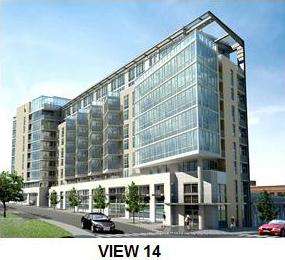
Cityscape on Belmont, known until now as Belmont Vista, was designed by Zahn Design. Bogdan purchased the land four years ago in a deal struck nearby at the MacDonald's at 14th & U (ew.) Bogdan's newest project joins a chorus of adjacent developments in what adds up to a busy construction site, all now under construction, including Level2's View14 (170 residential units), the Solea (59 units), and the Nehemiah Center, which has just begun demolition, to be eventually replaced by a large apartment building, all within feet of the entrance of Cityscape.

Bogdan's self-proclaimed style is "suburban style" in the city, having previously built sprawling houses in Potomac; recent examples of their urban handiwork are available at Logan Station, the Villaggio, and the Ivy at Harvard.

Friday, October 24, 2008

Sky-Low Prices in Randle Highlands

3 comments
Just days after the District went public with a proposal for the redevelopment of the St. Elizabeths Hospital campus, PERS Development, LLC is opening the doors on the Sky DC condo development - "apartment homes" in Southeast's Randle Highlands neighborhood. It's a move they hope will dovetail with the Department of Homeland Security's proposed move to the area and draw "more working class individuals...towards this part of the District."

The $4 million development at 1620 29th Street SE got its Sky DC moniker from the so-called "million dollar view" available from the rooftop deck. Totaling 17,000 square feet, PERS is offering amenities like built-in iPod docks, bamboo floors and temperature controlled wine coolers to court "new homeowners and young professionals" – a cause reflected in the relatively low $200,000 price points for the condos. The project was designed by Bethesda based architects, Easta Inc.

This is PERS’ fourth project in the District and the developer plans on branding it just as they have the others – with “a signature waterfall in the front exterior”. Furthermore, the developer describes itself as the “Carmax of Condo Buying” - due to their “no haggle, lower than market prices” – a point you can debate in person when they hold their second open house this Sunday.

Thursday, October 23, 2008

New High-Rise Art-itecture in Silver Spring

2 comments
There's a new high-rise coming to a prime slice of Silver Spring real estate - at 8711 Georgia Avenue. Currently the site of a parking lot and bank drive-thru, the creatively-titled 8711 Georgia Avenue Parking Lot, LLC (a nome de plume of original owner Zalco Realty Incorporated that was passed onto Guardian Realty Investors, LLC after the site was sold in 2007) is looking to build a 13-story, 152,740 square foot mixed-use building in between Georgia and Cameron Street with office space, retail and, in a surprising twist, an arts plaza designed to serve as an “urban oasis” at the northern end of the Silver Spring Central Business District.

Utilizing designs by WDG Architects, 8711 Georgia plans to bring 148,278 square feet of office space and 4,462 square feet of ground floor retail to the site with “illuminated entrance features” on all four sides of the proposed building and frontage on the future Fenton Street extension - amenities intended to highlight the public arts plaza.

The elliptical plaza - being designed by local artist Martha Jackson-Jarvis - would lie on the newly extended Fenton Street and contain four separate sculptural components. The first and most complex has been dubbed the “Wave Wall,” which is described as a “flowing mosaic of brightly colored materials of many sizes and textures” that will “undulate like waves.” This will lead directly into another smaller mosaic wall. Three-dimensional sculptures – intended to “be approached, touched and studied from all sides” - will sit in front of both walls. A mid-block pedestrian arcade will provide a link between the plaza and Georgia Avenue.

Preliminary plans for the project were approved by the Maryland-National Capital Park and Planning Commission (M-NCPPC) way back in 2006, the final draft was approved today. Presumably, it was a rather easy decision for the M-NCPPC to reach – the project is but two doors down from their headquarters and, quite literally, in their own backyard. Ziggy Schelec of Zalco Realty, who will still oversee leasing and management of the building, described the project as being “on the fast track” with a final timeline for construction to be established next week.

If it does, it would be one of the few. Most of the recent real estate projects in Silver Spring - Silver Place, the Ripley Project, 814 Thayer, and Studio Plaza, to name just a few - have intentions to move forward, but are finding it either impossible or impractical to do so in the current environment.

Wednesday, October 22, 2008

St. Elizabeths Plan Envisions Massive Redevelopment

3 comments
The District announced a new plan today to kickstart redevelopment of the old St. Elizabeths mental institution in Ward 8. If approved by the District Counsel, the series of projects will beef up one of DC's poorest neighborhoods with nearly 3 million square feet of mixed-use development. Mayor Adrian Fenty, Congresswoman Eleanor Holmes Norton, and Office of Planning Director Harriet Tregoning were on hand today to announce the release of the St. Elizabeths East Redevelopment Framework Plan, which recommends transforming the hospital’s eastern, District-owned flank into five neighborhoods, "each with their own character," and pushes for the Department of Homeland Security's (DHS) proposed relocation to federally-controlled St. Elizabeths West. The government transferred ownership of the eastern portion to the District in 1987, while retaining the western campus for its own use.

The Plan is sprawling in its scope – the size of the District-owned eastern half alone measures in at 173 acres. Together, construction on the two campuses - separated only by Martin Luther King, Jr. Avenue, SE - would be second only to the revitalization efforts underway on the Southeast Waterfront in terms of size and scope.

“I think what we have proposed…will not only benefit the people who live in Ward 8 and east of the river, but, just as importantly, the entire city,” said Fenty.

Redevelopment at St. Elizabeths East would create up to 2 million square feet of new mixed-use projects and 750,000 s.f. of renovated historic space. The proposed neighborhoods (pictured, below) are being broken down into the North Campus, Maple Campus, Town Square, CT Village and Metro Station; each would feature a distinct blend of commercial, retail and/or residential space, in addition to “civic and community” areas. The northern portion of the site has been reserved for DHS office space and parking – a move made to sweeten the deal for the Feds, no doubt (more on that in a bit). Meanwhile, the historic St. Elizabeths Hospital, its new 435,000-square foot secondary building and John Howard Cemetery on the grounds would be retained.

The Plan also includes provisos for a cohesive link to the two local Metro stations and MLK corridor, where the City is betting on seeing an influx of retailer and developer interest.

On the western campus, DHS’ proposed relocation would include the construction of new, secure headquarters meant to accommodate roughly 14,000 government employees. If and when the project moves forward, it would mark the first time the federal government has ever crossed the Anacostia River, according to Congresswoman Norton. DHS currently lacks a consolidated headquarters, with offices at different locations throughout the city.

The impact of such large workforce on the environment, Metro capability and local traffic is still being evaluated, while the inclusion of the site in the proposed southeast street car system is still a possibility.

The District will submit the Plan to the City Council next month with a decision to follow in December. A Request for Proposals regarding the DHS parking lots and offices is planned for December as well, the District hopes to break ground on that phase of the project in the first half of 2009. Norton described development as moving along an “unusually fast track.”

The Plan is the product of more than 5 years of parallel development by the General Services Administration (GSA) and the District. According to Norton, it's has been included in the Bush administration's budget for three straight years, but has only been able to move forward, ironically enough, since the Democrats came to power in Congress. The challenge now lies in convincing that same body that moving DHS to another, federally-owned piece of property in Southeast would be beneficial and, most importantly, cheap. It would appear that the future of both East and West hinges on a decision by the federal government; if DHS settles on another location or Congress blocks the site, it could be a deal breaker for both halves of St. Elizabeths.

“There will be great potential here if we continue to do it right. The city and the government will work closely together, as we have on projects in the past,” said Norton.

A budget for the project is forthcoming, and Norton will be holding a town hall meeting tonight from 5:30 - 7:30 PM at the UPO /Petey Greene Community Service Center (2907 MLK Jr. Ave SE) to disclose more details and listen to questions from the public. Another community meeting will be held at St. Elizabeths on October 28th.

Tuesday, October 21, 2008

Construction Underway at 1015 Half Street

0 comments
Concrete poured into the ground in Southeast last Friday as construction at 1015 Half Street got underway. A product of a partnership between Opus East, LLC and Prudential Real Estate Investors, 1015 will feature 442,000 square feet of office space, complemented by 21,000 square feet of ground- level retail, in the thick of Washington DC's burgeoning Capitol Riverfront neighborhood.

Aiming for March 2010 completion, the 10-story, WDG-designed building boasts a 2-story lobby, 8 1/2' ceilings, and views of the Capitol and Anacostia River. The development team also plans a green identity, employing recycled building materials, water-saving plumbing features, a 60% green roof and taking advantage of the site's proximity to the Navy Yard Metro to achieve a LEED Silver certification. Opus East is serving as the general contractor for the project.

The site may be notable to longtime District residents as the former home of the Nation nightclub and, for those with longer memories, the Capitol Ballroom. The project was initially under the control of Potomac Investment Properties, which turned it over to Opus in July of last year for a pre-bailout price of $41.5 million. The project is currently budgeted at $135 million - a small figure compared to what the development team stands to gain, if 1015 and the glut of other Capitol Riverfront projects currently underway can weather the economic downturn. Axis

2000 Wilson Finally Making Rubble in Clarendon

6 comments
2000 Wilson, the oft-delayed Clarendon apartment complex, has finally taken its first steps towards fruition. The Taco Bell franchise and abandoned Dr. Dremo's occupying the site are now being demolished to make way for 141 rental apartments and 36,000 square feet of ground floor retail.

Developer Elm Street Development initially planned construction late last year of what was first intended to be a condominium project (that's just so 2006), but now forecasts an open-ended 2010 completion target. Dr. Dremo's, the beloved neighborhood bar that used to stand on the site, closed its doors last January in anticipation of imminent demolition.

With that out the way and approval from the Arlington County Board locked, the WDG-designed project can now move forward unimpeded. The development is bounded by Wilson Boulevard, North Rhodes Street, Clarendon Boulevard, and North Courthouse Road, but confusingly carries a street address of 2001 Clarendon Boulevard despite the 2000 Wilson title; meaning the next hurdle for the project lies at the feet of the marketing team.

Monday, October 20, 2008

Industry Insight: Sami Kirkdil and Meral Iskir of SK&I Architectural Design Group

3 comments
Since its' inception in 1999, the SK&I Architectural Design Group has been one of the go-to names for striking, sophisticated architecture in the DC area. With mixed-use projects like Wisconsin Place in Friendship Heights, Union Row in Columbia Heights and an upcoming slate that includes Lot 31 in Bethesda, and the Washington Gateway and Constitution Square in NoMa, their designs will soon be more prominent than ever. Sami Kirkdil, President of SK&I, and Meral Iskir, Executive Vice President, took the time to sit down with DCMud and talk about their approach to architecture, the current effects of the housing market on an architectural firm, and what the District might look like a few years down the line.

How did you get your start in architecture?

MI: I originally studied back in Turkey and then studied again here at Catholic University. I’ve continued to work steadily since I initially came here 40+ years ago. I spent some years with CHK, then Sami and I started this firm. We’ve been doing all kinds of architectural projects and just working, working and working.

SK: I think my introduction to architecture was through my father’s friend – an architect friend. When I was a kid, he used to do sketches of buildings and give them to me, and that kind of intrigued me. I was basically good at math, science and art, so I thought, “Hey, this might be the thing for me” in high school. I knew what I wanted to do, so I went to college and have been practicing for the past 25 years.

I think that you are the most happy when you’re working hard and designing. Obviously, there’s a lot of red tape and a lot of things that you have to do, but designing and doing a project is the fun part of it. I think that’s what drives us towards the future. Somewhere along the line our specialty became mixed-use, residential design. In the last 8 or 9 years, we’ve done a lot of big residential projects. It was just the right time and the right place. There weren’t that many firms focusing on residential and we’ve had a head start on that game. We’ve grown from a two person firm to a 50+ person firm. We’ve kept that steady, but didn’t want to grow out of control and maybe lose the quality of our work.

What kinds of projects appeal to you personally and, by extension, your firm?

SK: Generally, our cup of tea is more complex projects that play in the urban realm, fit into the neighborhood and create a nice home for the people who live in it. There are always new ways to put together interpretive designs with the way buildings go together, basically.

How would you typify the developer /architect relationship? Are some harder to please than others?

SK: We might be a little different than a lot of other firms. I think our expertise is that we understand the development process as well the developers. Basically, what works and what doesn’t work. We can reason with them when it comes to what design ideas might propel them in a specific area. They don’t necessarily have to educate us; sometimes we try to guide them. We want to become their partners. We want to understand their theme and their dilemma. We want to give them an edge.

MI: Of course, our position allows us to work with different developers. This is kind of an advantageous position in the sense of understanding and thinking about a project through our own experience. It kind of enriches our understanding of what goes on in the market and allows us to show leadership through our designs. We’re not doing the architecture for ourselves, but for our clients. At the same time, we can control the quality and accomplish the best we can within the given conditions.

If you change one thing about the DC development process, what would it be?

MI: Getting to a better place where there is an appreciation for the architect’s efforts. That is lacking in general, as far as I’m concerned.

SK: Well, there are good things and bad things about building height. I think that’s one thing that would be good to look at. There are some instances where it creates a very walkable city. On the other hand, architecture becomes challenging when everything’s 13 or 14 stories. It couldn’t be a bad idea to have more height in some locations. I think, given that our resources are now more limited, we have to densify our cities. To me, densifying the city, outer suburbs, or Metro locations with higher height and higher density is probably something that would be good for Washington.

On that note, you built Union Row above a Metro station. What kind of challenges did that pose?

SK: Lots, actually. Part of the problem with that site was that it was an assemblage – a bunch of little pieces. But our real plight was the Metro tunnel running from 14th Street and curving down towards 13th Street. That part of the site we couldn’t actually build on. What we did was have the building’s shape follow the route and then we put our girders and columns right along it. We could only put two levels of parking there, while the rest was three levels. It was a long, lengthy process of getting approval from Metro and testing and excavation.

MI: In addition to that, we also had to provide access to the existing warehouses that were there – in addition to upgrading and renovating them. We tried to create a kind of plaza-like structure there. I think we were successful in the view from the main street and were able to manipulate the design in such a way that it gets your attention.

You have also been contracted for one of the largest projects in NoMa (Constitution Square). Can you give us a bit of insight into how NoMa might look in, say, 5 years?

SK: Well, instead of 5 years, let’s say 10 years. I think, potentially, people are wishing for the same thing that happened to Chinatown. We were there 9 years ago with Massachusetts Court at 4th and Mass and couple of other projects that did not go through. Today, if you look at Chinatown, they have all the nicest restaurants in the city. In a way, it’s surpassed DuPont, northwest Connecticut Avenue, in terms of pizazz. NoMa wishes that they’ll be seeing the same quality and caliber of that development. Obviously, the Verizon Center and all that retail is a big advantage and we want to see similar kinds of things in NoMa.

The project we’re doing is mixed-use – an office building, a hotel, a Harris Teeter grocery store and apartments. The hope is to create a critical base of retail, residential and office space, so that you’re not building up an area that shuts down at five o’clock. Since 2000, if you look at the city and our projects, we are trying to create a 24-hour living space that has a life cycle with offices and retail. You’re not necessarily commuting; you’re living, shopping and working in the same place. You’d hope that NoMa becomes that.


MI: I think the fundamental approach is understanding how neighborhoods and areas stay alive, rather than just a being a place to go to in the daytime and empty in the nighttime. I think they want a good foundation for a better future this time.

How much work do you do outside the metro area?

SK: We have done international work over the years and, if you look at our career, we’ve done all that stuff. If you look at the past 9 years, we were really busy and did not want to grow. We used to turn down almost 20% of the work that came in the door. We were cherry-picking the projects that we’d do. Obviously, circumstances have changed, so we’ll probably be looking at doing projects outside the area. We’ve done projects up and down the East Coast from Miami to Boston.
MI: We were involved with many projects outside the area, for example, Harbor East in Baltimore. We did an 18-story project there that was mixed-use – again, with retail.

How does the current economic situation affect an architecture firm?

SK: I’m sure the whole development world is living on fumes. Obviously, with the current financial market, there’s very little money available. There are two things going on. There are great projects that have secured financing to do private work; and there is some entitlement work that will go forward. People are hoping that the market will turn around and it’s that optimism that’s the driving force. I’m sure there will be a great opportunity to have any kind of product out there in a year or two. Once the economy turns back, the first people out of the gate will make out the best. Once the market steams up, you jump in to catch a piece of it. We have some clients that are in a cycle where they’ll be delivering in 2011, 2012, 2013 and they’re hopeful that their financing is intact. Other clients think the market is going to shrink. And it is shrinking because the capital behind what you can finance is zero. We are hearing it every day, it’s tough out there. We’re going to see a lot more competitive pricing. For the first time since we’ve opened our doors, we’re actually out there chasing RFPs.

MI: Generally, lots of architecture firms are actually shrinking. At the time, some of the other ones are looking abroad to the Middle East and so on. But everyone’s affected.

What was the most challenging project you’ve ever worked on?

SK: I think every project’s a challenge. Our specialty is – even though we’re a mid-size firm – we tackle really complex projects. One of our projects that’s under construction, Wisconsin Place, had basically three or four different teams. The garage was done by different architect and structural engineer and parts of the building were done by another architect and structural engineer, so there was a lot of interface coordination and collaboration between all these different teams. A “who does what?” type of deal, so Meral championed that effort and it took us a while. We had to wait for other firms to finish their work.

The other project we’re currently working on is going to be very complex - Lot 31 in Bethesda, which is now two parking lots across from Barnes & Noble. There was a very complicated entitlement process and we’re now full throttle in the design process. It’ll take a while to get it built because what we’re doing is, basically, taking Woodmont Avenue away [laughs]. We’ll be digging into the rock for five levels and building a column-free garage. Then, we’re doing a 9-story building on one side and a 5-story building on the other.

MI: Thinking about it while Sami was talking, I think every project has its’ own challenges. You have to try to design it in such a way that the building will look unique, but still serve the neighborhood and be able to get through the approval processes. You have to work with the contractors and combine with the developer’s needs to make the project as successful as it could be. I don’t want to sound conceited, but I think our experience is such that we are good listeners and can point any issues before they become a problem. It forces us to make every project a 360 degree success.

Every project has its’ own unique expectations and character. They’re like your children. Every one of them has a different personality and the challenge is having happy and successful children, in a certain sense.

If you could work on any project, what would it be? A dream project...

MI: Is there such a thing as a dream project? Human beings always change and what you liked yesterday could change tomorrow. When I look back at some of the projects I’ve done, I liked them then, but not necessarily today. At the time you might think of it as a dream project, but tomorrow you could always say, “Was it really?”

SK: It’s tough, but the kind of project that allows me to be wild and think freely is a dream project. That said I can’t design a house for myself because I’m my own worst critic. When it comes to designing your own thing, it’s not easy. I’m very deliberate and straightforward in designing projects for others. For myself, I’m terrible because I want to accomplish much more than I can handle – the program, the aesthetics, the budget. If you design something today and look back at it in a few months, you might say, “No, maybe that wasn’t the right thing to do.” Your tastes change. It’s a process that keeps your brain sharpened.

Donatelli Bringing 'Downtown' to Minnesota-Benning

4 comments
Mayor Fenty today announced the District’s selection of Donatelli Development and Blue Skye Development as the developers of a 5-acre parcel at Minnesota Avenue and Benning Road, NE, adjacent to the Minnesota Avenue Metro station.

The $108 million mixed-use project will bring 40,000 square feet of retail space, 375 affordable housing units and 60 market units to the major hub of Ward 7. These developments will be coupled with “a 5,000 square foot retail incubator” reserved for local businesses and 2,500 square feet of “community space.” Architects Eric Colbert & Associates are designing the project.

“This area is what some are now calling ‘Downtown Ward 7,’” said Fenty. “That is because of the energy, the already existing activity level and also the great potential of Minnesota Avenue and Benning Road.” The intersection currently houses several strip malls, an auto parts store and a parking garage dedicated to Metro parking (pictured).

Once completed, the project will neighbor the new, already under-construction Department of Employee Services headquarters. Fenty went on to point out that several other developers have also expressed interest in remaining lots on all four corners of the busy intersection.

This announcement follows an RFP for the site issued last spring and a competing proposal from City Interests, LLC. Christopher Donatelli, President of Donatelli Development, said he expects construction on the by-right development to begin “as quick as possible,” with a probable start date sometime in the next 18 months. He went on to say that the project should be open for business “36 months from today” – meaning the first signs of a true downtown for Ward 7 should start to crop up in late 2011.

The project is being fast-tracked by the District, as it requires no subsidies from the local government and no changes in zoning. Donatelli is also taking advantage of federal lending programs targeted at affordable housing development that will allow them to move forward with the project during the current economic slowdown.

“As long as there is a need for affordable housing - and we know that there is - this project will be addressing the supply,” said Donatelli. Donatelli has substantial cred with the Mayor, after having transformed Columbia Heights from a similarly vacuous site to a thriving metro center. Blue Skye was chosen just last week for redevelopment the Tewkesbury, a blighted District-owned apartment building in Brightwood that will convert to condominiums. Lacey

Saturday, October 18, 2008

Low Density, Low-Income for U Street Lot

14 comments

The ever-changing U Street corridor is likely to receive another housing project - this time courtesy of the Public Welfare Foundation (PWF) and the Metamorphosis Development Group (MDG). The development team is planning on constructing 10 new, affordable houses on Temperance Court, NW - an alley between 13th and 12th Streets containing a surprisingly large (13,000 s.f.) vacant lot just steps from U Street and next to the Metro station.

Designed by Amy Gardner of Gardner Mohr Architects LLC, the single-family town homes envisioned for the site will be available to those making less than 60% of the Area Median Income and will include a mix of one and two bedroom floorplans.

Given Temperance Court's designation as a historically protected site, the development team has filed paperwork with Historic Preservation Review Board (HPRB) and expects notes on their plan in December. They’ll also be meeting with the local ANC board next week - the commissioner of which, coincidentally, lives adjacent to the alley. If everything goes according to plan, Metamorphosis expects to file for a Planned Unit Development (PUD) in December of next year, and to begin construction in late 2010.

The Temperance Court development marks the PWF’s first foray into affordable housing. According to their website, they typically provide grants for “scholarships and occupational training, medical equipment, [and] clinics.” But, according to Christopher Donald, Managing Partner of MDG, the project isn’t entirely out of their purview. “The project is kind of an anomaly, but because of the historic nature of the project, they wanted to return it to its former use to serve some of the same families that they would serve in other ways,” he said.

It should also be noted the PWF is headquartered at 1200 U Street, NW (AKA the “True Reformer Building”), a stone’s throw from Temperance Court. Not a bad commute to the job site.

Friday, October 17, 2008

Nothing But Blue Skies Ahead for Brightwood Apartment

0 comments

The District of Columbia announced yesterday that it has selected Blue Skye Development and the Educational Organization for United Latin Americans to redevelop the Tewkesbury, a long-abandoned Brightwood apartment building.

A piece of real estate Washington DC Mayor Adrian Fenty called "a disgrace" and "a blight on the Brightwood community for more than 20 years," the 26-unit apartment building at 6425 14th St., NW, dates from the mid '50's and has been vacant (officially) since 1985. The District had cited Vincent Abell, the former owner, with over 100 housing code violations, and initiated a suit against him and several other landlords in April for repeated code violations. Not a bad deal for Abell then, who received $3,000,000 for the property from the District, or $115,300 per blighted, disgraceful unit.

Deputy Mayor Neil Alpert's office moved quickly through the selection process, issuing the RFP just this May, selecting the winning bid from the four received by the August deadline. In addition to the Blue Skye team, the District had received bids for the 30,000 s.f. building from Mi Casa, Inc., PML Real Estate, LLC, and 14th Street Partners - a group including UrbanMatters Development Partners LLC, Northern Real Estate Urban Ventures, and Emory Beacon of Light, Inc. A plus factor that appeared to cinch the deal for Blue Skye was its inclusion of a 54 unit building at 1330 Missouri Avenue, a property the developer now controls and will turn into a senior living center.

Mayor Fenty announced that the building will be converted into 13 market-rate condos and 13 "affordable" units, without specifying that nature of those units. The Deputy Mayor's Office for Planning and Economic Development predicts that construction "could begin" by summer of next year.

Wednesday, October 15, 2008

Wheeler Terrace Goes Green in Southeast

4 comments
The Community Preservation & Development Corporation (CPDC) today led a groundbreaking ceremony for the all-green renovations currently underway at Wheeler Terrace public housing project. Once stigmatized as a "crime hotspot," the newly refurbished, seven-building development is being touted not only as being beneficial to the environment, but as a (healthy) shot in the arm for Southeast as well.

"You saw this big, beautiful tent and thought you were in Georgetown, but you're not. You're in the new Ward 8," said councilman and former mayor Marion Barry during his remarks at the event. "Southeast Washington has had a negative image for a long time. We're going to turn that around."

CPDC and the architects behind the project, Wiencek + Associates, are seeking to lead by example by outfitting Wheeler Terrace with a cadre of green features usually unheard of in public housing. The 116 affordable housing units – located at 1217 Valley Avenue SE - will feature energy efficient insulation and appliances, clean-air systems, white reflective vinyl roofs, a green roof demonstration project, and – in a first for District public housing – heat supplied by a geothermal pump. Upon completion, it will be the only such project in the city to merit a LEED gold certification – another point of pride for the developers and tenants alike.

“[The current tenants] are absolutely thrilled. The fact that they have the opportunity to go green is a big deal for them,” said the CPDC’s press contact for the project, Michelle Darden Lee. “It saves on utility costs and one of the things that this project shows is that going green isn’t just for upper income projects.”

Funds for the $33 million project were drawn from a variety of sources – primarily a $4 million loan from the Enterprise Community Partners (ECP) and City First Bank, and another $1.9 million loan from the Housing Partnership Fund. ECP also made two further contributions to the project: a $50,000 grant for “green design and planning expenses” and a $25,000 grant for “organization development.” Other financial partners on the project include the District of Columbia Department of Housing and Community Development, the District of Columbia Housing Finance Agency, PNC Bank and Union Bank of California.

According to Mark James, CPDC’s Project Manager for the development, Wheeler Terrace’s troubled past didn’t preclude the developer from having any shortage of investors:

One of the reasons we selected ECP and the bank is that they were not only aware of who we were as developers, but also very committed to doing green building. They felt as though CPDC has done a number of projects in areas that had experienced blight and significant reinvestment over the years. When we put the idea of being green along with our experience as affordable housing developers, they felt extremely comfortable.

Plans for redeveloping the blighted housing project stretch back to 2006, when the residents of Wheeler Terrace exercised their right to purchase the land under the District’s Tenant Opportunity to Purchase Act (TOPA). The new owners, the Wheeler Terrace Tenant Association, selected CPDC as developer shortly thereafter. Turner Construction is currently spearheading the renovation efforts at the 133,000 square foot site. Construction is expected to be completed in July of 2009.

Tuesday, October 14, 2008

High-Style and Mixed-Income Meet at Parc Rosslyn Opening

7 comments
This Thursday, the new Parc Rosslyn high-rise - located at 1531 North Pierce Street - will open its doors to the public and solidify its' place as one of Arlington County's greatest affordable housing accomplishments. The product of more than 10 years of work by the Arlington Partnership for Affordable Housing (APAH), the Parc Rosslyn is a 15-story, 238 unit building that sports 96 units of affordable housing and amenities otherwise unimaginable in such a development - floor-to-ceiling windows with views of the DC skyline, patio grills, a business center, a concierge and, perhaps most surprisingly, a rooftop swimming pool.

"I think people will be stunned by this beautiful building," said Nina Janopaul, Executive Director of APAH. "It represents a very efficient use of government resources to create this wonderful opportunity for a mixed-income, diverse property.”

Located in the Rosslyn-Ballston corridor, the Collins & Kronstadt-designed building satiates the area’s needs for high-density, affordable, green housing (a LEED silver certification is pending for the project) in one of the region’s biggest and busiest thoroughfares. “We’re really fulfilling this goal that the Arlington County Board had back in the 1960's to create transit-oriented development,” Janopaul told DC Mud. “We’re using density near public transit corridors - and what a wonderful thing that is for the environment, too.”

At a total cost of $68 million, more than two-thirds of Parc Rosslyn budget came from tax exempt bond-issue financing – making it the largest ever such project approved by the County. "Essentially, the term of art is a conduit financier," says Ken Aughenbaugh , Director of Arlington County's Housing and Neighborhood Division. "These bonds are sold on the market by an investment bank to others who buy the bonds as investments - usually larger corporations or mutual funds. This is a mechanism that other jurisdictions around the country use to finance affordable housing developments." The rest of the funds for the project came from low income housing tax credits and soft second mortgage financing provided by the County.

APAH originally acquired the site - which formally housed a 1940s-era, 22-unit garden apartment development - from Arlington County in 1994 at no cost, but did not begin construction until January of 2007. Residents began to move in this past July, while the finishing touches – swanky pool included – were finally completed in September. Construction was handled by Paradigm Development, the company which will also be serving as the building manager of the project.

In order to mark the occasion, Parc Rosslyn will hold its’ gala grand opening this coming Thursday, October 16th, on site at the new building. Congressman Jim Moran (D), Chairman J. Walter Tejada of the Arlington County Board, Executive Director Susan F. Dewey of the Virginia Housing Development Authority, APAH Chairman Caroline Settles, and Executive Director Janopaul will all be on hand to remark on the occasion. The ceremonies begin at noon and will include a tour of the facilities. The event is open to the public.

Years Late, Old Post Office May Deliver

7 comments
President George Bush has signed a bill into law that seems to finally set in motion the redevelopment of the Old Post Office building at 1100 Pennsylvania Avenue. The law specifically encourages the General Services Administration (GSA) to develop the building upon authority it received back in 2001, but which the GSA failed to implement.

The federal law specifically faults the GSA, given authority to redevelop the building in 2001, for dallying to produce its 2004 Request for Expressions of Interest, a document which generated substantial buzz and private sector feedback at the time, but which the GSA miscarried, leaving it unchanged. GSA could not be reached for comment.

GSA and the Office of Management and Budget had been evaluating redevelopment options for the famed edifice on Pennsylvania Avenue for a number of years. Federal Triangle’s Old Post Office was the largest government building and the first steel-framed building in the capital when initially built as the headquarters of the Post Office Department in an attempt to revitalize the surrounding neighborhood.

Complete demolition is not a threat as it was after WWII, but under the National Historic Preservation Act the government space can be leased to private tenants, providing endless possible uses for the building. In the 80’s, the GSA tried to take advantage of this by creating retail space on the first two floors, a project that has since proved financially unsuccessful. Congress suggested that the use of the lower level space not be predetermined, but rather this redevelopment project to be used as an opportunity for developers to submit unique ideas for the building – with the stipulation that any changes made to the inside of the building during redevelopment be reversible.

The bill calls for the facility to put to a better use than its’ current incarnation as the home of a food court and a dwindling number of government offices. This would mark the first step towards the realization of one of the key tenets of the National Framework Plan (which DC Mud reported on last Friday). Specifically, the Plan calls for the 109-year-old historic building to be incorporated into the grounds of a new, mixed-use development that would stretch from 9th Street to 12th Street NW. How this would affect any current tenants remains to be seen. The GSA is given specific authority to move the current federal tenants into other buildings.

The speed of the redevelopment does seem a bit, well, postal, given that the idea was initially put forth…wait for it…44 years ago. The Pennsylvania Avenue Commission - initiated by President John F. Kennedy in 1962 - recommended the demolition of the Post Office to allow for completion of Federal Triangle and revitalization of what was then a decaying strip of Pennsylvania Ave. Nancy Hawks, the Chairman of the National Endowment for the Arts at the time, led a crusade against the measure that included letter writing campaigns and full blown street protests. Eventually, the government backed away from the matter and the building was added to the National Register of Historic Places – a status that will protect it against demolition during any redevelopment efforts that take place. Metropole

Monday, October 13, 2008

3 Teams Bid for SW Firehouse Site

2 comments
If you've ever dreamed of living out your childhood fire fighter fantasy by sliding down a brass pole to get to your office, the Office of the Deputy Mayor for Planning and Economic Development (DMPED) has good news for you. DMPED recently received three responses from local development teams concerning the District's redevelopment proposal for two sites at 4th & E Streets SW - including turning the current home of Fire Engine Company 13 at 450 6th Street SW -- into a mixed-use development.

The proposals come from three differing alliances of local developers. JLH Partners, Chapman Development, and CDC Companies comprise the first team; Trammell Crow, CSG Urban Partners, and Michele Hagans as the second; and Potomac Investment Properties, City Partners, and Adams Investment Group (together calling themselves E Street Development Partners LLC) the third.

The proposals for the site include plans for rebuilding the 34,000-s.f. Engine 13 station (either on site or within a two block radius), up to 465,000 square feet of office space, a 130-208 room hotel, and the inclusion of ground level retail. According to a statement released by the OMPED, two of the submissions include “proposed community space,” while one set out plans for “an 11,000 square foot atrium-covered public indoor park.” This jives with the District’s insistence on seeing a community center incorporated into any prospective design. The proposals presumably align with the initial RFP’s insistence that at least 35 percent of any contracts go to certified local, small or disadvantaged businesses, and that at least 51 percent of the new jobs created by the project go to District residents.

The projected construction would also envelop the second site included in the District’s RFP – a 19,000 square foot vacant lot bounded by 4th Street, E Street and the Southwest/Southeast Freeway. Deputy Mayor Neil Albert's choice should be known by December, the District's deadline for selecting the best team. Groundbreaking could take place as early as summer 2010.

Located behind the Metropolitan Police Department’s (MPD) First District headquarters, this marks the second such construction project the District has planned for the block. After their last location proved too expensive, the MPD building at 415 4th Street SW will undergo demolition in order to make way for a new, 240,000 square foot Consolidated Forensics Lab (CFL) - construction of which is expected to begin in December. BIDs for that project are due to the District’s Office of Property Management by November 7th.

Axis

Friday, October 10, 2008

Framework Plan Re-Envisions Downtown DC

4 comments

With development occurring throughout the District, many local and government agencies called earlier this year to establish a scheme to orchestrate continuity between Washington’s most visited areas and the up-and-coming projects now in the pipeline. The rejoinder has finally arrived. The National Capital Framework Plan (NCPF) - co-authored by the National Capital Planning Commission (NCPC) and the US Commission of Fine Arts (USFA) - outlines several strategies to "enhance Washington's reputation as a walkable, transit-oriented, sustainable city" for residents and tourists alike.

The plan focuses on four distinct areas of District development: the Northwest Rectangle, the Federal Triangle (including Pennsylvania Avenue), the Southwest Rectangle and East Potomac Park. In all, the plan highlights 5.5 million square feet of land that it aims to dedicate to 4 new museums, 75 acres of “civic gathering space,” 32 acres of recreational area, 13 acres of parkland, “numerous” memorials, federal office space and mixed-use development.

The Northwest Rectangle (defined by F Street to the north, Constitution Avenue to the south, the Potomac to the west, and 17th Street to the east), first on the docket, requires “a symbolic and physical connection” to be established between the Kennedy Center and the Lincoln Memorial. That would include extending E Street NW and establishing it as a one mile “landscaped boulevard” that would connect to the Kennedy Center, the White House and President’s Park - resulting in a new public park on Virginia Avenue NW between 19th and 22nd Streets NW. New residential and shopping areas would be installed on a deck above the Potomac Freeway, which would also allow 25th & 26th Streets NW to be reintegrated in the street grid. The infrastructure modifications don't stop there - the plan also suggests a realignment of the Theodore Roosevelt Bridge to free up desirable public space along the shoreline.

Over in the isolated Federal Triangle, the Plan re-i magines Pennsylvania Avenue NW as space that will live up to its status as “America’s Main Street.” The Plan critiques federal installations such as the Old Post Office and the J. Edgar Hoover FBI Building as not living up to their potential and suggests, politely of course, that the government simply find a new home for these tenants elsewhere in the city (no rush, any time in the next 30 days would be fine). In their stead, the plan calls for the creation of new grand mixed-use development between 9th and 12th Streets and a new National Aquarium (already planned to front Constitution Avenue) - in addition to other “cultural and hospitality destinations” for the area, including the Freedom Plaza, a “Federal Walk” history and arts trail and public outlets that would supply the area with some semblance of a nightlife.

"Mixed-use" is also the word of the day in the Southwest Rectangle. Described accurately as an “uninviting federal enclave” - albeit one the federal government created with an earlier plan intended to "revitalize" an existing neighborhood - The Plan proposes an extensive rebuild of 10th Street SW. Smithsonian Castle to a refurbished Overlook (current home of the Maine Avenue Fish Market), transform The new street would run from the Maryland Avenue SW, link the US Capitol to the Jefferson Memorial and serve as a gateway to the emerging Southwest Waterfront. By taking advantage of 18 acres worth of air-rights, the NCFP proposes a new “mix of office, cultural, entertainment, hospitality, and residential” development that would terminate at a newly decked out Overlook. The hope is for new street-level projects on the north side of Maine Avenue SW - across from the waterfront – including (yet another) new museum on the site. The Liberty Loan building (14th & D Streets SW), the Whitten building (1400 Independence Avenue SW) and a portion of the Forrestal complex (1000 Independence Avenue SW) are also identified as possible museum locations. Plans for Maryland Avenue consist of a new park at the intersection of Maryland and Virginia Avenues SW and the reclamation of the original street grid that is currently sliced-and-diced by train tracks and tunnels leading to Union Station.

The NCFP aims to integrate East Potomac Park into the fabric of daily life in the District by making it more than just a golfing and jogging destination. This would be primarily achieved by improving connections between the Park and the city proper through the construction of a canal by Buckeye Drive SW, a new Jefferson Memorial Metro stop, and a new foot bridge at P Street SW “to improve boat, pedestrian and bicycle access.” Additionally, the area surrounding the Memorial would be expanded and improved by eliminating the numerous “infrastructure barriers” dividing the park. Along the shoreline, the waterfront esplanade presently on site would be raised and widened so as to showcase memorial sites (like Hains Point), maritime areas and natural wetlands. The Plan also recommends the inclusion of stops for proposed water taxi service that would connect Nationals Stadium, the Southwest Waterfront, Alexandria, Georgetown and National Harbor. The area which the Plan identifies as the most ripe with potential, however, is the northern side of the park on the Washington Channel, being dubbed Potomac Harbor. Envisioned as the location of “new low-scale, one to two story, development,” Potomac Harbor would host cafes and water-based recreation activities that would serve as a complement to the numerous mixed-use projects occurring directly across the river. Lacey

Thursday, October 09, 2008

RFP Issued for Deanwood Rec Center

0 comments
Hot on the heels of last week’s Strand Theater announcement, Northeast’s Deanwood neighborhood is now in line to receive a new $20 million, 63,000 square foot community center. Banneker Ventures LLC (also the developer behind the Strand revitalization initiative), Reagan Associates LLC, DC Housing Enterprises and the Program Manager of the center’s current incarnation, have jointly issued a request for qualifications to builders that aims to have the new Deanwood Community Center (DCC) open and operational by May 2010. The project is the product of a partnership between the Office of the Deputy Mayor for Planning and Economic Development (OMPED) and the Department of Parks and Recreation (DPR).

Located at 49th & Meade Streets NE, the new DCC will sport “an in-door leisure swimming pool," gymnasium, game rooms, full library, a child care center, and dedicated senior space, as well as swanky designs by Ehrenkrantz Eckstut & Kuhn Architects (EEK) and a projected LEED silver certification. Everything currently on the site – including the swimming pool, tennis courts and the existing building – will face demolition in the coming weeks.

Proposals are due to Banneker by 12 PM on Monday, October 20th.

Skyland Readying for Take-Off

0 comments
Despite years of false starts and a finicky housing market (to put it delicately), the long in-development Skyland Town Center is now pacing itself for a 2012 delivery. Well, maybe. Described by the 5-member development team - which includes the Rappaport Companies, William C. Smith & Co., Harrison Malone Development LLC, the Marshall Heights Community Development Organization (MHCDO) and the Washington East Foundation - as a "prominent living, shopping and gathering place," the $285 million Skyland project aims to deliver more than 700,000 square feet of mixed-use development, mostly in the form of new housing.

Located at the intersection Alabama Avenue & Good Hope Road SE - across from the present location of the Good Hope Marketplace, the Skyland Town Center will boast 280,000 square feet of retail space and 460,000 square feet of residential housing. Of the roughly 475 residential units included in the project, 20% of the units will be available to families earning 80% of the Area Median Income (AMI) or less, 10% will be reserved for residents making 120% AMI. Torti Gallas & Partners also designed 21 single-family townhomes and three above-ground parking garages to serve the development.

Skyland replaces undeveloped land on the back of the site, and a small, dated mix of retail along the front of the property. Pre-development work on the project began in 2002 under the watch of former Mayor Anthony Williams and the National Capital Revitalization Corporation, which served as developer until the project was handed off to the present team in 2007. According to Steve Green of William C. Smith & Co., though the developers have made progress, the current economic climate makes a firm start date difficult to pin down.

And because nobody is planning to start a residential construction project in 2009 - and 2010 isn't looking much better - developers at Skyland are not inclined to rush. “Given the current market conditions, [a timeline] is particularly difficult to predict,” said Green, “but our best estimate…is that we would close on the property and begin demolition in the fall of 2010 and completion of the first phase would be 24 months later in the fall of 2012.”

William C. Smith & Co. expect to file a PUD for the Skyland Town Center on or around November 15th. The DC City Council has already approved $40 million worth of Tax Increment Financing for the project. Washington DC based WCS Construction will build the project.

Wednesday, October 08, 2008

Alexandria Low-Income Gets Mixed-Income Makeover

3 comments
The Alexandria Redevelopment and Housing Authority (ARHA) and EYA Development Inc. have filed for the permits needed to move ahead with their proposed redevelopment of Alexandria's James Bland Public Housing Project.


Following
the demolition of all 194 units that currently occupy the site, the development team hopes to install a radically different housing development that will promote "mixed-income communities." Shooting for a 65/35 ratio of market-rate to public housing, the new James Bland will consist of 159 townhomes and 86 multi-family units on the upscale end, and 72 townhomes and 62 multi-family units on the affordable side. The same ratio will be maintained throughout each block of the five block development - with no separation by income type.

Other components of the redevelopment include a new, 13,800-square foot park at the intersection of Alfred & Montgomery Streets – intended to cater to the expected influx of families with children, and to serve as a link to the new Charles Houston Recreation Center. A second, 7,800 foot park has also been proposed at the corner of First Street.

The $55 million project will be drawing its funds from AHRA’s sale of the Glebe Park public lots to EYA - whichs plan on beginning construction at that site next month - and Virginia low-income housing tax credits. The plan proposes that 44 of the 194 public homes at James Bland then be relocated to the Glebe site upon completion. The builders plan on offsetting the environmental effects of the construction by aiming for LEED certification – the grade has yet to be determined – and recycling as many building materials from the old structures as possible. The development team has also pledged to use designs that are in keeping with the greater aesthetic of the Parker-Gray neighborhood.

The developer plans five phases of construction, with the build-out expected to commence in November, 2009. The buildings on the 8.49 acre site were originally erected in 1945, and converted in public housing by the AHRA in 1987. The development team received approval for demolition and for their preliminary concepts on September 24th. The project still awaits approval of special zoning and special use exceptions needed to bring the development to fruition.

Axis Condos


Washington DC real estate - the Axis Condominiums on Capitol Hill

Affordable Housing Championed in Northern Virginia

3 comments
The Arlington County Board approved a new measure last month that aims to increase the number of affordable housing units available within the Fort Myer Heights neighborhood, while protecting those already in existence. On September 13, the Board summarily approved the Fort Myer Heights North Plan, which complains that "as the core areas of Rosslyn and Courthouse continue to build out, redevelopment pressure in this area has increased dramatically. The fabric of this neighborhood is being eroded by luxury by-right development that meets neither the goals of the community nor the County." Since 2004, the area has lost nearly 200 affordable units - nearly a quarter of those available - to redevelopment.

As a remedy, the plan lists construction of affordable units and the preservation of existing units as its primary goals. While the tear down and rebuild process usually results in the loss of affordable housing, the County is looking to make that an unattractive prospect for developers. According to the report, developers seeking to start new projects in historically protected segments of Fort Myer Heights will no longer be offered financial incentives. Instead, the plan encourages developers “to work closely with [County] staff to determine a suitable total affordable housing package” in non-historic areas.

The new declaration of policy means development proposals to wipe out affordable housing will be met with resistance by the county and, in the event that deal is made, that all residents of affordable housing be relocated to new units with the same price tag. Any new designs for non-historically protected buildings must offer at least 10% of its units as affordable.

The implementation of the Fort Meyer Heights North Plan marks the third such maneuver underway in the greater Arlington area. Last month, the Board approved the JBG Companies’ revised site plan for their Jordan Manor project in Ballston. The crux of the revisions is an almost four-fold expansion of the number of affordable housing units –from 24 to 90. And in neighboring Alexandria, the IDI Group Companies' (best known for their Leisure World developments in Maryland and Virginia) are still pursuing their bid to convert the 530-unit Hunting Towers apartment complex (pictured above) into 100% affordable housing, while constructing 4 buildings worth of luxury condominiums next door.

Tuesday, October 07, 2008

Project Taken to New Heights on Georgia Avenue

2 comments
Like a snowball rolling downhill, the number of residential developments on Georgia Avenue is getting bigger by the minute. The latest project on the boards is The Heights at Georgia Avenue by the Neighborhood Development Company (NDC) - a 100,000 square foot mixed-use building that will feature 100% affordable housing. Besides adding 69 new apartments to the Petworth real estate market, the project at the intersection of Georgia Avenue & Lamont Street NW will also add roughly 10,000 square feet of retail to the mix. The developer is currently engaged in talks with a hardware retailer about the site and hopes have a sit-down restaurant in place when The Heights opens its doors in early 2011.

The Heights' all-affordable status has put it in a unique position with the District of Columbia. This week, Councilmember Jim Graham will introduce a bill before the City Council that aims to grant the project an exemption from property taxes for the next 40 years - provided it maintains an at least 50% margin of affordable housing in that time. The proposal should be voted upon sometime this fall.

NDC president Adrian G. Washington told DC Mud that ANC approval for The Heights at Georgia is forthcoming. “We’ve met with the ANC on several occasions and gotten a letter of support from the single-member district commissioner…We’re actually going tomorrow and we hope they will formally approve it.”

The Georgia Avenue site was acquired by a partnership of NDC and Mi Casa Inc. – a DC-based non-profit that specializes in restoring aging properties and converting them into affordable housing. The Heights will be their second brand-new new construction project (the first being the Rittenhouse Project in Brightwood). The building is being designed by architect Graham Parker and will come in at a cost of approximately $25 million. Construction is slated to begin in the fourth quarter of 2009.

The Heights is only one of numerous projects currently in development in the Petworth neighborhood. Up the street at 4136 Georgia, Formant Development's proposed 57-unit, 7 story condominium tower is still scheduled to go to ground in 2009. Meanwhile, Donatelli Development’s Park Place is currently under construction and their proposed project across the street at 3801 Georgia recently issued a BID to contractors. These twin projects are joined by the massive redevelopment just up the street of the Park Morton public housing complex.

UPDATE: The Heights at Georgia Avenue's final address has been confirmed as 3232 Georgia Avenue NW - across the street from the NDC's Lamont Lofts project that was completed in 2005.

Florida Rock Gives a Little, Gets a Lot on the SE Waterfront

1 comments
One of the proposed touchstones of the Southeast Waterfront redevelopment, Diamond Teague Park, took a step towards reality yesterday as Mayor Fenty accepted an $800,000 construction contribution from developer Florida Rock Properties - the group behind the Riverfront on the Anacostia development next door to the park’s proposed location. The $16 million, 39,000 square foot park was described by Fenty as a "green destination" that will route foot traffic to and from Nationals Stadium and become a tourist draw in and of itself.

"We are leveraging this investment to create great public spaces that open up the river to the entire community," said Fenty in a statement distributed at the event. In remarks made at the foot of Nationals Stadium overlooking the Anacostia, the mayor went on to express his hope that the river will one day be among "the cleanest in the country" (good luck).

This marks the second such contribution made towards the park. In April 2007, the JBG Companies made a $1.5 million donation to the Landscape Architecture Bureau-designed project. Construction is expected to begin next month.

Meanwhile, Florida Rock is confident that its project will meet its 2011 start date. In May, they received zoning approval for the former concrete plant site on Potomac Avenue SE - pending a donation to Diamond Teague Park. Their Riverfront on the Anacostia development will host 560,000 square feet of residential and hotel space, 29,000 of which will go towards affordable housing. Office and retail space are also planned for the venture, to the tune of 545,000 and 80,000 square feet, respectively. A large waterfront promenade will link the development to the neighboring park. The Riverfront project is being designed by Davis Buckley Architects and Planners.

Friday, October 03, 2008

Northeast DC Icon Gets a Little Help

0 comments
Mayor Fenty was on hand today to announce that the District has finally settled on a developer and would move ahead with redevelopment of the long-abandoned Strand Theater in Deanwood. The project is now in the hands the Washington Community Development Corporation (WCDC) and Banneker Ventures LLC - organizations that plan on transforming the 80-year-old former movie theater into the new home of an 18,000-s.f. restaurant and 18,000 square feet of “affordable” office space. The remaining 16,000 square feet within the Strand will be “dedicated for community and cultural uses,” according to a press release issued by the Mayor’s office.

“There will be more energy back on this corner for the neighbors who live in the Ward 7 community, east of the river in general and for the entire city,” said Fenty from the sidewalk of 5131 Nannie Helen Burroughs Avenue, NE. Fenty and WCDC head Rev. Steve Young, also leader of the Holy Christian Missionary Baptist Church for All People located across the street, went on to promise that 30 - 40 new, permanent jobs will created as a result of the revitalization effort.

Curiously enough, this marks the second time the District has named the WCDC and Banneker as developers in charge of the Strand. The first came this past July, when Deputy Mayor Neil Albert told DC Mud that the project would “break ground in the next two weeks.” Sean Madigan, the Mayor’s press contact, today told DC Mud the District was forced to hold off a bit, while the rest of the details concerning the theater were hammered out.

Banneker has had a dream year lobbying District officials, having secured from District work on the Strand, and having been named Master Planners for the Park Morton redevelopment, and as a developer of the $700 million Northwest One development. WMATA added to the company's portfolio by naming Banneker the lead developer in June for its Florida Avenue project, and Banneker has its own plans in place for 814 Thayer, a 52-unit condominium in Silver Spring's central business district. WMATA Board member and DC Councilmember Jim Graham reportedly pushed for the developer's inclusion in the project; WMATA said it chose the developer based on its "experience," noting the technical difficulty of building a project on top of an existing Metro tunnel, though Banneker has no previous experience building above a Metro tunnel. Or, apparently, above much else. Park Morton, 814 Thayer, and the WMATA project have yet to break ground, and Northwest One has only recently done so, leaving the conversion of several small apartment buildings into condominiums as its only achievements. Banneker's website touts its appointment to several of the above projects, as well as its "tremendous breadth of experience and professionalism." Calls to Banneker’s metro area offices went unanswered.

As it stands today, Green Door Advisors and Blue Skye Construction will handle the build-out of the heavily dilapidated building, located at the intersection of Burroughs Avenue and Division Avenue NE. The Strand Theater is currently on the DC Preservation League’s list of Most Endangered Places in the District. Hopefully, that will be changing as the Strand moves on to a bigger and better future.

Thursday, October 02, 2008

Fort Totten or Bust

0 comments
Northeast’s Fort Totten will be almost unrecognizable (in a good way!) by 2012 if a group of local developers are able to get their proposals off the ground. In presentations made at yesterday's DC Economic Partnership Annual Meeting and Development Showcase, developers brought forth not one, but two major development proposals for the intersection of South Dakota Avenue and Riggs Road NE. Together, they plan to bring more than million square feet of retail and nearly 2000 units of housing to the area - essentially the same model of high-density shops, apartments and arts space that Montgomery County planners used to such great effect in Silver Spring.

First on the block is Lowe Enterprises Real Estate Group and JackSophie Development’s Fort Totten Square. Plans for which have been bandied for the past 2 years, but according to Lowe's staff and publicity literature, the project is now on track for a 2010 completion. Designed by Hickock Cole Architects, their 9-acre parcel will feature 900,000 square feet of residential and retail space, complimented by 100,000 square feet of “grocer-anchored” retail. Residential units will arrive in the guise of The Dakotas – an 875 unit development that will also sport on-site parking.

In a concurrent phase of development is the Fort Totten Arts Place – a 20-acre redevelopment project being funded by the Morris & Gwendolyn Cafritz Foundation. Standing right next door to Fort Totten Square project – and on top of the neighborhood enclave that currently stands at 4th and 5th Streets NE – the EEK/MV+A-designed stretch of storefronts and apartment buildings will almost be a neighborhood in and of itself. For starters, the development will include 1220 residential units (220 reserved for seniors) and 147,000 square feet of retail. The latter will be reserving 9,000 square feet for a brand new Safeway supermarket, 82,000 square feet for neighborhood businesses and 6,000 square feet for a major banking branch.

You might be thinking, “Where is all the art at Arts Place?” The Washington National Opera might be a good place to start – they’ll be getting 75,500 square feet of rehearsal space, costume shops and production and administrative offices. The Shakespeare Theatre Company will also join them on the block will their own 75, 500 square foot space of administrative offices, costume and prop shops, and, yes, rehearsal space.

It’s also been seen to that the local community will get their fair share of benefits out of all redevelopment hoopla. There will be a new 27,000 square foot DC Public Library, 15,000 square feet of public performance and meeting space, a 20,000 square foot senior center, a 10,000 square foot daycare center, a gym, a health facility geared towards seniors, a cyber cafĂ©, and a renovated and reconfigured plaza in Morris Square. Altruistic organization Food & Friends, which delivers meals to the terminally ill and is already located in Fort Totten, will also receive an expansion of its existing facility.

These twin packages of development should serve as a fine compliment to the joint Clark Realty – Washington Area Transit Authority apartment complex at the Metro station that completed Phase I of its’ $58 million, 3-building development earlier this year. If the Lowe and Cafritz projects make it out of the planning stages, we're going to be looking at very different Fort Totten in the near future.

Casey Trees Branching Out in Brookland

2 comments
Local not-for-profit environmental organization, Casey Trees, has acquired the site of a former gas station, located at 3015 12th Street NE, in Brookland. In the coming weeks, the garage on the site will be razed to make way for a 10,000 square foot "mini-nursery" and tree holding site that will be used as a staging area for Casey Tree's Community Tree Planting initiative, which - in cooperation with the DC Department of the Environment - aims to plant 13,500 new trees by 2014. The 7-year-old organization previously planted 1400 trees throughout the District in 2007 alone.

The gas station acquisition, however, is a mere footnote compared to Casey Tree's plans across the street. As was announced in December of last year, the organization will be moving from their old K Street headquarters to a 14,000 square foot facility at 3030 12th Street, NE - following a dramatic renovation and expansion of the latter site.

The 3030 site was purchased from residential developer Taurus Enterprise Group Inc. for $1.95 million late last year. By spring 2009, Casey Trees plans to have a 3-story, 10,000 square addition in place that will accommodate a staff that they intend to nearly double over the next decade. SmithGroup - whose motto, coincidentally, is “tree-hugging optional” - is being charged with the redesign and plans to incorporate – no shock here - as many green features as possible into the building. Casey organizers plan on using their new $4 million headquarters to “put down roots” (seriously) in an area notoriously free of green streetscapes and, hopefully, inspire neighbors as Brookland itself undergoes significant redevelopment of its’ own.

Casey Trees is currently operating out of temporary headquarters on 11th Street, NW. Their planting program just received a major donation from American Express that will go toward 30 planting projects from November to May 2009. Public proposals for projects funded by the recently acquired cash are due by November 30 – just short of spring planting.

Wednesday, October 01, 2008

Donatelli Downsizes Petworth Metro Building

0 comments
Developers Willco Residential and Donatelli Development are moving forward with their initiative to revitalize a stretch of Georgia Avenue marred by vacant lots and blighted businesses. Billing itself as “the first luxury, boutique residential property in the Columbia Heights/Petworth neighborhood,” the project located at 3801 Georgia Avenue NW will - according to a BID issued by Donatelli on September 22 - feature 12 rental units of 1 or 2-bedroom, 850 square foot apartments. Additionally, the concepts on hand call for the construction of a “sit-down” restaurant and 5,000 square feet of retail space.

This announcement marks a change to the initial plans that projected 49 residential units and space for only 1 to 2 retail outlets. Now that the scale of the building has been pared down, the developer is posting no requirements for affordable housing and, as such, “will offer luxury urban living at lower price points than larger competing luxury properties.” Accordingly, they expect a successful leasing effort and a low vacancy rate from the get-go.

Christopher Donatelli, President of Donatelli Development spoke to the reasoning behind the loss of the residential space. “Anytime you have an empty lot like that you can come in with a quality development is a good thing,” he said. “We’re going to get some retail in there…Trying to get a good development there at the Metro seems to make a lot of sense.”

The new building is directly across the street from Donatelli’s 161-unit Park Place development above the Georgia Avenue/Petworth Metro - due for completion this winter - and is being designed by architects Eric Colbert & Associates (see DC Mud's previous coverage of Park Place). The project is expected to go to ground in May 2009.
 

DCmud - The Urban Real Estate Digest of Washington DC Copyright © 2008 Black Brown Pop Template by Ipiet's Blogger Template